Architectural Language: Why 0.1mm Defines a Masterpiece
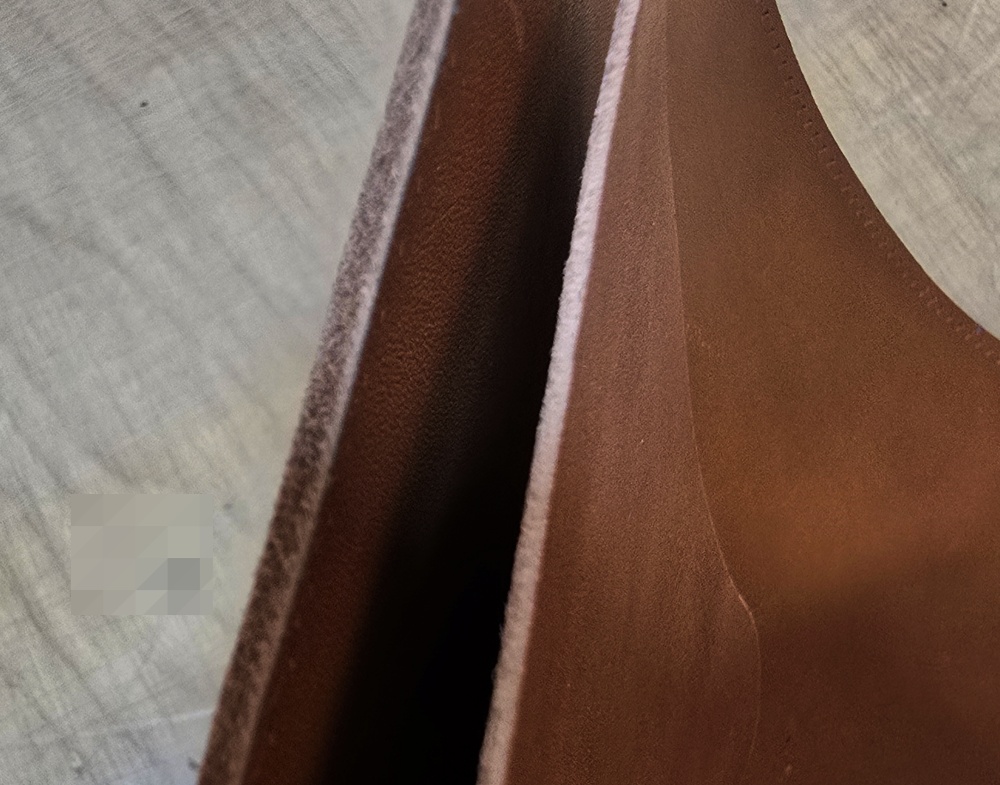
In high-end leathercraft, the thickness of leather is never a mere dimension; it is a core architectural language that determines the structural survival of a design. A variance of just 0.1mm serves as the absolute boundary dividing an unidentifiable, collapsing object from a luxury masterpiece that preserves its golden ratio for decades.
For the artisan, calibrated control of material thickness is the very first and most rigorous calculation. This guide deconstructs the physical mechanics, micro-skiving techniques, and interlining principles required to evolve a raw hide into a self-supporting leather structure.
Key Point
In premium bag construction, leather is treated not as a supple textile, but as a structural beam; a shift of 0.1mm instantly alters the material's mechanical resistance and load distribution.
1. Material Mechanics: Leather Thickness and Flexural Stiffness
To build a bag without structural collapse, one must understand flexural stiffness ($D$). In structural engineering, the capacity of a flat surface to resist bending scales exponentially with thickness. This mathematical relationship is non-linear, operating instead as a cubic function ($D \propto t^3$).
Doubling the thickness of a leather panel increases its resistance to bending and sagging by an overwhelming factor of eight. Conversely, carelessly over-skiving a mere 0.2mm instantly obliterates more than 50% of the leather's natural structural stiffness. This is precisely why a YEGAK artisan never works by intuition; we rigorously analyze the tissue density of European calfskin to determine the exact thickness required to defy gravity.
2. The Structural Blueprint: Optimal Dimensions Across Leather Genres
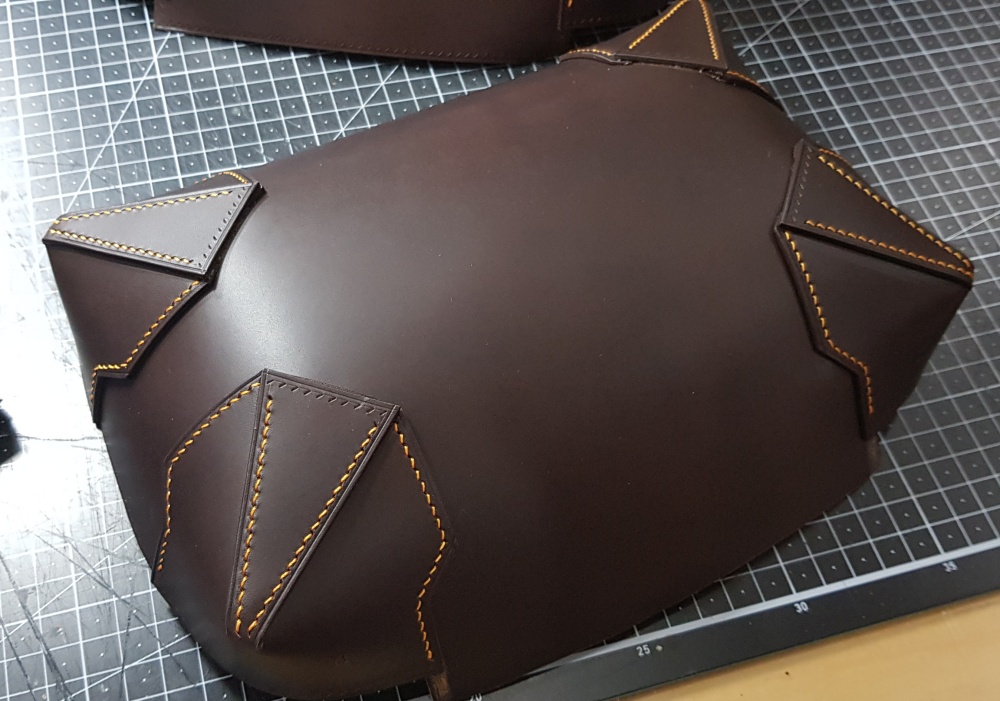
Every leather object demands its own mechanical equilibrium. Below are the rigid thickness standards enforced within the YEGAK curriculum to reconcile structural durability with artisanal refinement.
- Small Goods (Card Wallets, Pouchettes): Exterior panels must be precisely calibrated between 1.2mm and 1.5mm to yield a firm, resilient tactile experience. Internal card slot layers are skived down to 0.6mm–0.8mm, ensuring the wallet does not bulge clumsily when cards are inserted.
- Tote Bags & Unlined Daily Bags:
Main body panels require a substantial weight of 1.5mm to 1.8mm. Within this threshold, the bag achieves an elegant, organic drape without forfeiting its structural perimeter silhouette. - Structured Boston Bags:
The principal architectural walls are maintained at 1.2mm to 1.4mm, mechanically coupled with a deliberately engineered interlining core. The base panel, which bears the entire load vector of the bag, demands a full-grain leather base of at least 2.0mm. - Rigid Box Bags & Doctor's Bags:
To securely anchor a heavy internal frame and execute razor-sharp, three-dimensional geometric corners, the core gussets command an uncompromising thickness of 1.8mm to 2.2mm.
3. Micro-Skiving: The Art of Seamless Three-Dimensional Joining
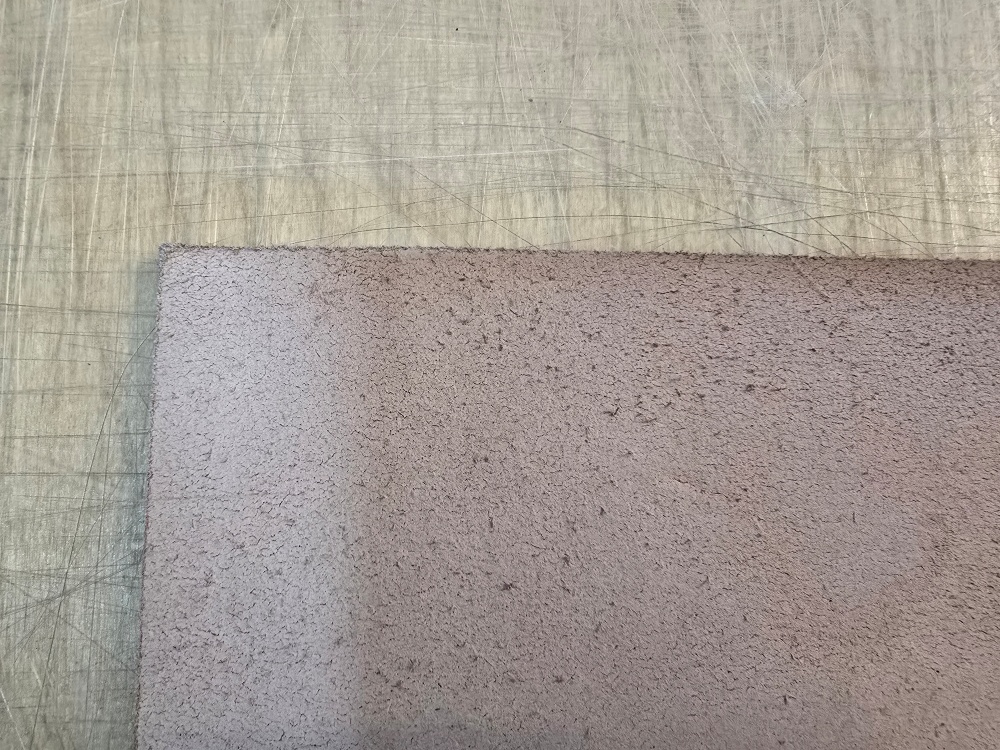

Raw hides delivered from tanneries exhibit inconsistent thicknesses across different quadrants; precision skiving is mandatory to tame these deviations. High-end assembly mechanics demand exacting French skiving and micro-edge beveling.
Shaving the margin of a 1.4mm panel down to a seamless 0.6mm taper allows the artisan to fold the edge over itself, yielding an ultra-sleek joinery interface free of clumsy bulk. A flawed thickness ratio where two panels intersect introduces internal structural tension, which, over time, warps the stitch lines and stresses the thread matrix. Proper micro-skiving is the sole method to render all seams completely flush and structurally continuous.
Artisan’s Note
A finely tuned utility knife exposes the true structural integrity of the hide. If the leather warps or tears during a 0.5mm edge skive, it stands as proof that the hide lacks the collagen density necessary to anchor high-end architecture.
4. Synergizing Core Materials: Interlining Engineering
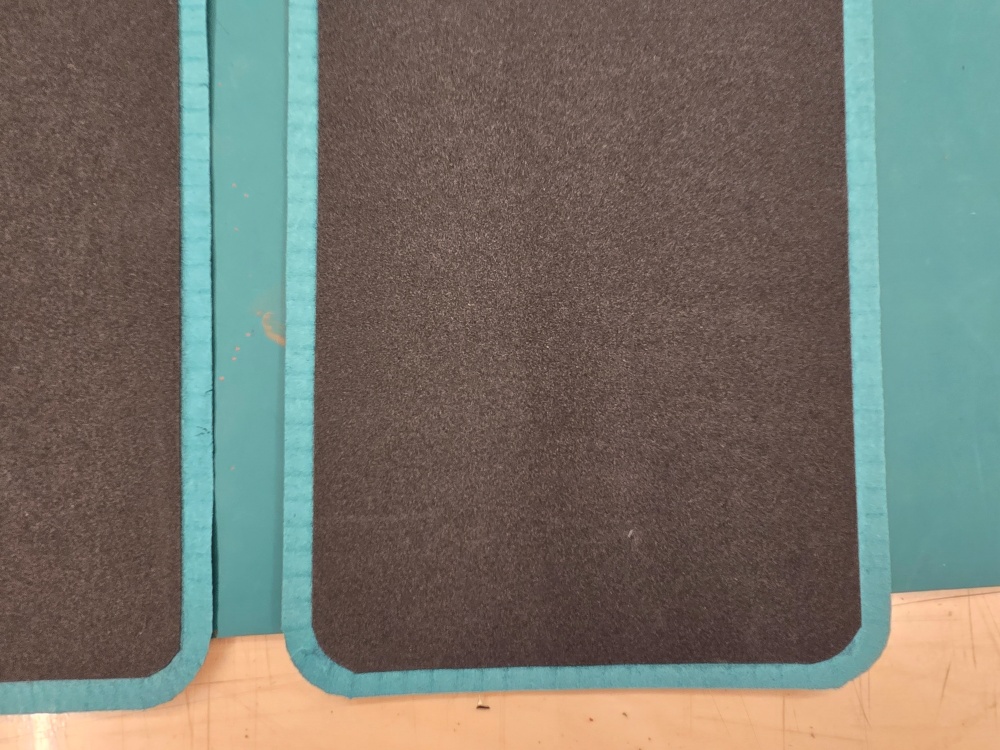
Thickness alone cannot solve every architectural challenge; natural leather remains an organic skin that inherently yields to tension under sustained humidity and physical stress. To secure permanent geometric stability, the artisan strategically pairs skived leather with specialized European interlinings.
- Leatherboard (Salpa / LB): Composed of compressed recycled leather fibers, it bonds with 1.0mm leather to replicate the dense, rigid hand-feel of a 2.0mm panel without adding excessive weight.
- High-Density Texon: An unyielding cellulose matrix inserted like a mechanical heart inside bag bases or rigid handle structures to guarantee shape retention.
- Premium Latex & Microfiller: Layered beneath a 1.2mm side panel, these materials provide a luxurious, high-resilience spring-back memory, completely preventing the panel from premature sagging or creasing.
5. The Artisan's Criterion: Calculating the Golden Equilibrium

How does a master artisan close the final structural equation? We evaluate three organic variables:
- Tannage Type: The structural rigidity inherent in a 1.2mm vegetable-tanned leather is often significantly superior to that of a supple 1.8mm chrome-tanned leather.
- Grain and Fiber Direction: Cutting patterns parallel to the animal's spine yields maximum resistance against distortion; utilizing the belly region demands additional structural reinforcement or thickness compensation calculations.
- Intended Silhouette: Mapping with perfect clarity the fluid zones where the bag must organically yield to movement, versus the rigid architectural vectors that must remain permanently fixed.
🌐 The YEGAK Knowledge Graph: Recommended Reading
To command absolute control over high-end architecture, material thickness must be perfectly synchronized with professional mechanics and geometric design. Continue your technical evolution through our official curriculum:
- Foundational Asset: Review the chemical foundations of structural rigidity in [The Ultimate Guide to Vegetable-Tanned Leather].
- Next Technical Discipline: Mastering Blade Physics - [The Science of Leather Skiving: Taming Fiber Density with Razor Precision] – Upcoming Release
- Advanced Engineering: Decoding the Geometry Behind Structural Equilibrium - [Pattern Engineering: Architectural Stability and the Golden Ratio] – Upcoming Release
Leave a Reply