Structural Logic and Material Mechanics for High-End Leather Crafters

If leathercrafting is defined merely as the act of cutting, punching, and stitching leather according to a pre-existing pattern, then a deep technical understanding of the material might be an unnecessary luxury. However, if your goal is to engineer a timeless masterpiece that preserves its structural stability for decades, the beginning of every design equation must unquestionably be Vegetable-Tanned Leather.
This guide deconstructs the true mechanics and physical proportions hidden beneath artificial coatings, demonstrating the structural essence of why high-end artisans reject the convenience of mass production to demand this challenging material.
1. Chemical Processing vs. Botanical Properties (Chrome vs. Vegetable)
To master a material, one must first understand the essence of its creation. Today, over 90% of the leather circulated in the global market is Chrome-Tanned Leather. This method utilizes chemical agents such as chromium sulfate and heavy mineral salts to complete the tanning process en masse in a matter of hours. While chrome leather is highly advantageous for mass production—being lightweight, supple, and resistant to stains—it chemically alters the protein fiber structure within the hide completely. This alteration eradicates the leather’s inherent "structural memory," rendering it impossible for an artisan to mechanically control, shape, or set the form using traditional hand-tooling techniques.
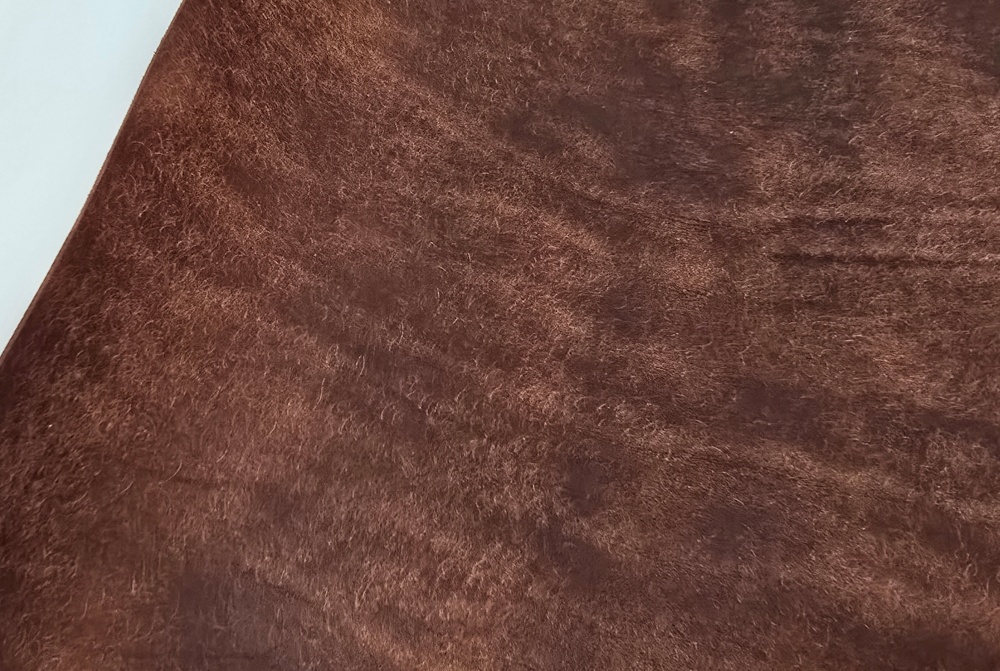
Conversely, Vegetable-Tanned Leather relies exclusively on plant-derived, natural tannins extracted from tree bark, chestnut fruits, quebracho wood, and mimosa leaves. Hides are submerged in traditional wooden vats, aging slowly over weeks or up to six months as the tannin concentration is gradually increased. This slow, deliberate process preserves the natural collagen fiber networks of the hide, binding them into an even tighter, more rigid matrix.
As a result, because vegetable-tanned leather lacks a synthetic plastic or polyurethane coating, the animal's natural stretch marks, wrinkles, veins, and healed scars remain fully visible on the surface. Far from being flaws or defects, these natural marks serve as the most noble certificate of authenticity, proving the material is no synthetic imitation, but a unique canvas gifted by nature.
2.The Structural Logic of High-End Design (Construction Logic)
An artisan’s decision to select vegetable-tanned leather on the workbench is never born from mere vintage sentimentality or the abstract notion of craftsmanship. It is a precise engineering calculation that balances mechanical properties with long-term structural durability.
① Dense Fiber Structure and Plasticity
Premium vegetable-tanned leather possesses an overwhelmingly higher internal fiber density compared to chemically processed alternatives. When cased with water, the rigid collagen fiber networks temporarily soften, preparing the material to accept pressure and molding. As the moisture evaporates, the leather exhibits true plasticity, permanently memorizing and setting the curves, sculptural volumes, and three-dimensional architectures intended by the artisan. This precise mechanical property is the sole engine that allows a doctor's bag to retain its crisp, rigid frame, or prevents a Boston bag's generous volume from collapsing over time.
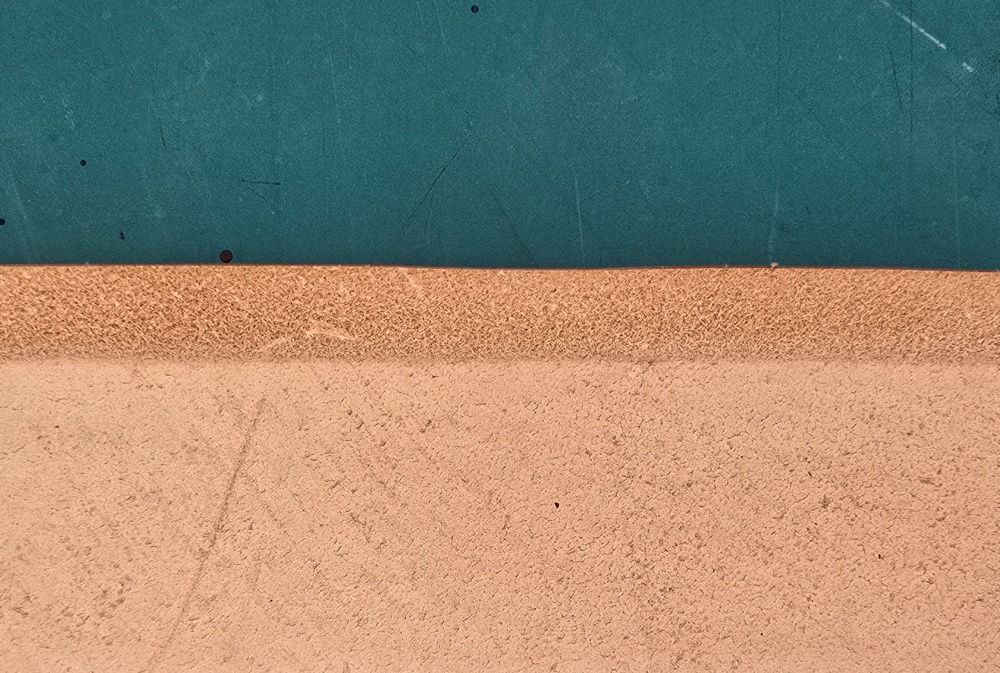
② Precision Skiving and Edge Finishing Properties
Leathers with loose, erratic fiber structures stretch and warp when meeting a skiving knife, rendering microscopic thickness control impossible. In contrast, the tightly knit architecture of vegetable-tanned leather permits manual bevel skiving accurate to 0.1mm increments, perfectly eliminating the bulk at overlapping seam allowances.
Furthermore, during the edge-sleeking process, these dense fibers compress under frictional heat, fusing into a glass-like, rigid burnish without requiring a single drop of chemical paint. Finished solely with Tokonole or natural resins, this edge will never harden, crack, or peel away with age—representing an uncompromised realm of craftsmanship that synthetic edge paints can never replicate.
3. Aging (Patina): The Design Philosophy Completed by Time
Chrome-tanned leather is at its peak aesthetic on day one out of the factory; as time flows, its synthetic coating scratches, peels, and degrades into a weary obsolescence. Vegetable-tanned leather, however, initiates its true design and narrative the moment it leaves the artisan’s bench to meet the user's hands.
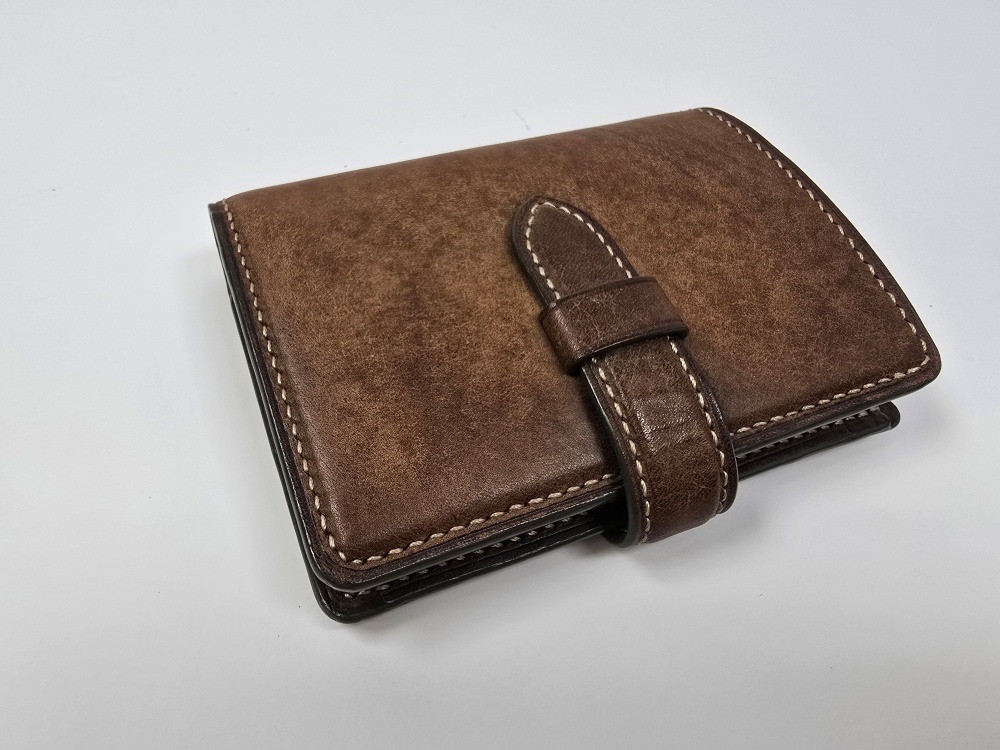
Through contact with the user's natural oils, daily exposure to sunlight, and friction, the rich waxes deeply infused within the core rise gracefully to the surface, developing a deep, translucent patina. As decades pass, the architecture softens organically to adapt to the owner's habits, yet the structural bones of the bag settle into an even firmer stance. The "20-Year Living Asset" envisioned by YEGAK is defined exactly by this endurance—a durability that converts the passage of time into an appreciation of value.
4. The Artisan's Criterion: Engineering the Balance of Thickness and Interlinings
No matter how extraordinary a full-grain vegetable leather from an elite European tannery may be, faulty panel allocation or flawed thickness design will cause a bag to either collapse or become as heavy as a stone. The master artisan must continuously calculate the equation between the leather's tensile resistance and the total weight distribution.
- Small Goods (Card Wallets, Clutches, Passport Cases): Internal stiffeners are minimized or completely omitted to maximize the inherent resilience of the leather itself. Exterior panels are skived precisely between 1.2mm and 1.5mm, while internal linings and card slots demand a highly disciplined ratio of 0.6mm to 0.8mm to preserve a slim, functional profile.
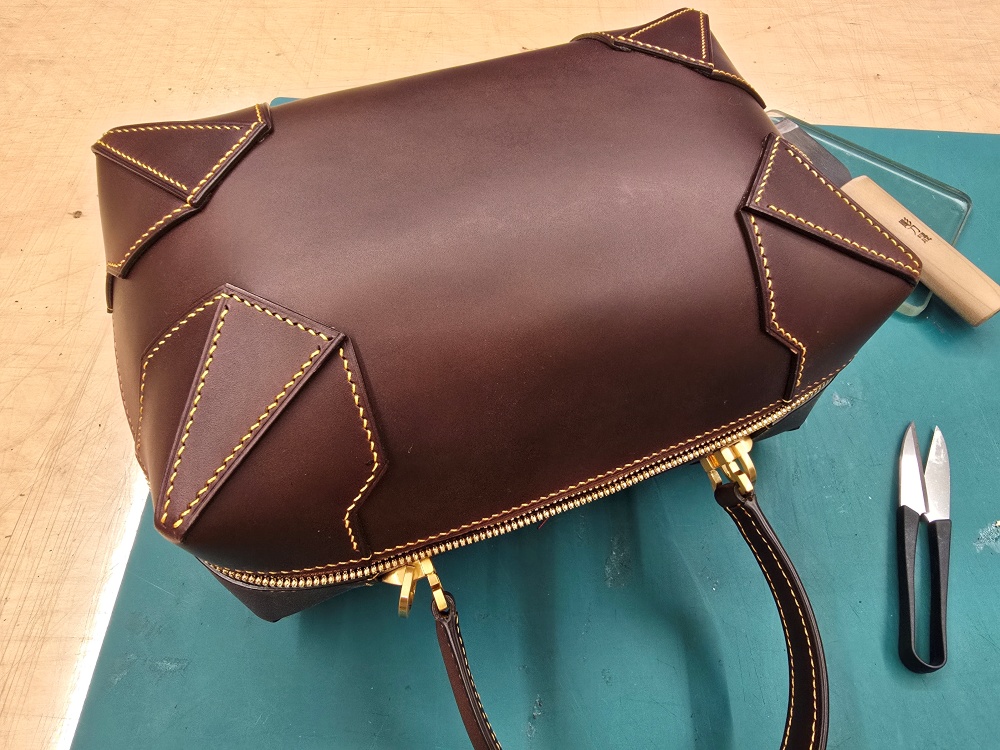
- Structural Bags (Boston Bags, Totes, Briefcases): The base panel that anchors the entire load and the spine backings that command the structural center must utilize a weighty, unyielding foundation of 1.8mm or higher. Conversely, side gussets requiring turn-out construction or complex arched contours should be skived to approximately 1.0mm, then mechanically coupled with high-resilience French leatherboard (LB) or natural latex interlinings to prevent sag and maintain golden proportions over time.
Connecting to the Next Discipline (YEGAK Knowledge Graph)
Having understood the material's essence and mechanical qualities, it is time to progress toward the artisan's tools and the precise techniques that tame these dense fiber networks. Our interconnected curriculum continues below:
- [Tool Encyclopedia] The French Pricking Iron: Proper Grip and Power Mechanics for Piercing Dense Fibers
- [Construction Technique] The Equation of Thread Tension and Material Resistance: The Traditional Saddle Stitch Slanted Formula
- [Design Theory] The Golden Proportion of Luxury Bags: Structural Stability and Warp-Free Pattern Balance
Leave a Reply