Tag: Leather Skiving

  • 가죽가방 입구 설계는 왜 중요한가: 지퍼 길이와 옆판 장력의 관계

    Why Leather Bag Opening Design Matters: Zipper Length and Gusset Tension

    When viewing a finished leather bag from the front, the proportions of the body, the handles, and the color of the leather usually attract attention first. However, once the bag is opened and closed, the opening becomes one of the clearest indicators of its overall quality.

    When the zipper is closed, the opening may fail to form a straight line. The center may sag, the ends may lift, or the leather around the zipper may ripple. Even a bag that initially looks well aligned can gradually develop a widened or uneven opening with use.

    These problems are not caused by the zipper alone. Leather bag opening design is a structural process determined by zipper length, the thickness of the opening leather, reinforcement, gusset tension, handle placement, and the construction sequence.

    A bag opening is not simply a final section completed by attaching a zipper. It is the upper structure where forces from the body panels, gussets, handles, and internal construction come together.

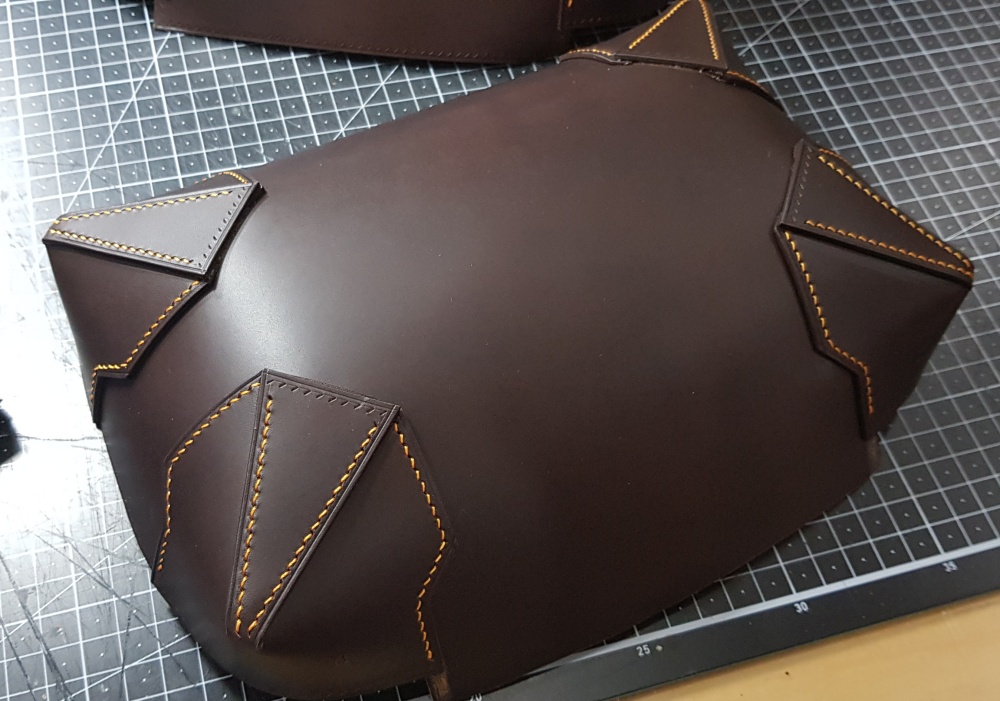
    브라운 가죽 토트백의 전체 형태와 입구 실루엣

    A Bag Opening Must Work Both When Closed and When Open

    When designing a bag opening, it is not enough to make it look straight only when the zipper is closed. When opened, it must provide enough space for the hand to enter naturally and for items to be removed comfortably.

    If the opening is made excessively rigid, it may look neat when closed but fail to open wide enough. If it is too soft, it may be convenient to use but unable to resist the weight of the contents and the pulling force of the handles, causing the top edge to deform.

    The opening must therefore satisfy two conditions at the same time.

    • When the zipper is closed, the height and alignment of both sides must remain stable.
    • When the zipper is opened, the opening must expand smoothly as needed and then return to its original shape.

    A well-designed opening is neither completely rigid nor excessively soft. It maintains a balance between opening movement and shape retention.

    Zipper Length Should Not Be Determined Only by the Visible Opening Length

    It is easy to assume that a 35-centimeter bag opening simply requires a zipper of the same length. However, the opening length shown on the pattern may differ from the actual path the zipper follows after assembly.

    The finished opening length changes when the leather turn-in, gusset seam allowance, zipper-end clearance, and final leather thickness are considered. With a curved opening, the flat pattern measurement may also differ from the actual path followed by the zipper after assembly.

    If the zipper is too short, it may pull both ends inward, causing the top edge to curve or the center to rise. If the zipper is too long, the excess length may create ripples in the zipper tape or bulk at the ends.

    What to Check Before Determining Zipper Length

    • The actual length of the line along which the zipper will sit in the finished bag
    • Whether the zipper ends will be concealed inside the leather or left exposed
    • The clearance between the zipper stops and the handle attachments
    • The amount of length lost when the opening leather is folded
    • Whether the opening is straight or curved
    • The angle at which the gusset meets the opening

    A zipper should not be selected using only a single measurement written on the pattern. Its actual path and movement in the finished bag must be considered first.

    Gusset Tension Pulls the Opening Outward or Inward

    Although zipper and reinforcement problems are often blamed for a spreading opening, the height and attachment length of the gusset also have a major influence.

    If the attachment lengths of the body panel and gusset do not match precisely, one component must be stretched or compressed during assembly. The resulting tension may not be immediately visible, but it can later appear as distortion around the opening as the leather settles with use.

    If the gusset is attached too tightly, it can pull both sides of the opening inward. If excess gusset length remains, the ends of the opening may spread outward or develop wrinkles.

    For a curved gusset, several matching points should be marked to ensure that the body and gusset are distributed in equal proportions. Aligning only the beginning and end while estimating the middle by eye can create uneven tension between the two sides.

    If the two sides of the opening look different, first check whether the body and gusset were joined at matching positions with equal tension before altering the opening line itself.
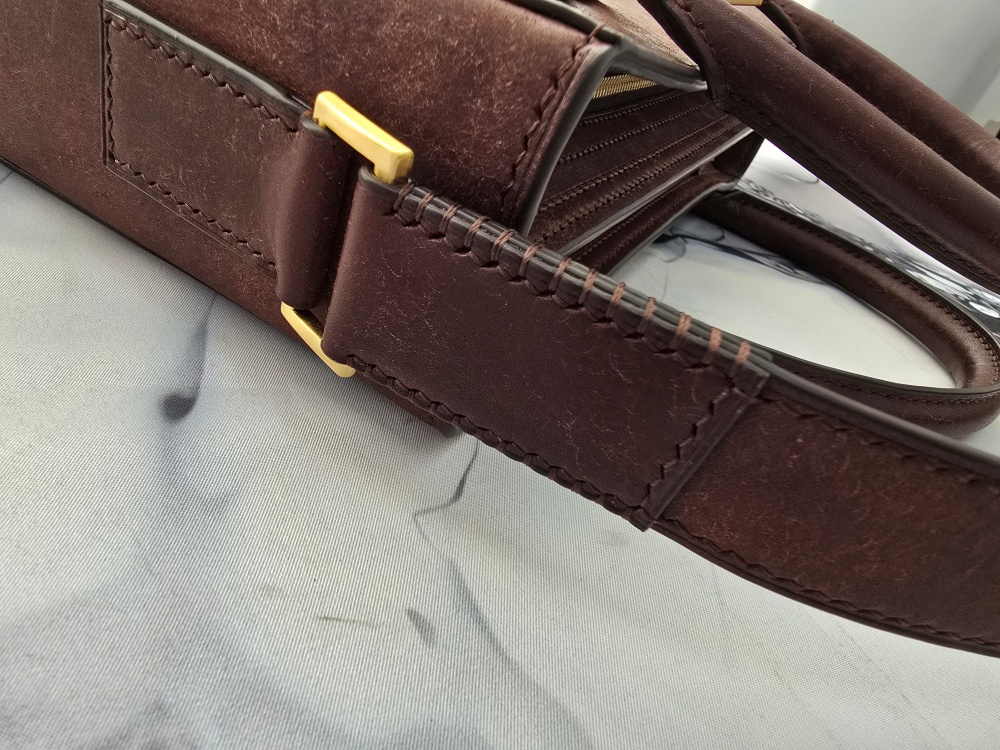
    가죽가방 입구와 옆판이 연결되는 측면 구조

    Stronger Reinforcement Is Not Always Better

    The opening requires reinforcement because it is repeatedly affected by zipper movement and handle loads. However, adding thick and rigid reinforcement does not necessarily produce a better opening.

    Excessively rigid material may preserve a straight line but create a sharp bend where the opening meets the gusset. The opening may not expand sufficiently, and repeated movement may eventually reveal the edge of the reinforcement through the leather surface.

    Insufficient reinforcement, on the other hand, may allow the top edge to stretch or sag under handle loads and repeated zipper movement.

    Therefore, when planning area-specific reinforcement, the opening should not have the same stiffness throughout.

    • Reinforce long straight sections sufficiently to maintain a stable top edge.
    • Retain flexibility where the opening meets the gusset so that movement is not restricted.
    • Reinforce the load-bearing area around the handle attachments separately rather than stiffening the entire opening.
    • Taper the reinforcement near the zipper ends to prevent a sudden increase in thickness.

    Good reinforcement does not force the leather into a fixed position. It allows the leather to move only where movement is needed.

    Uneven Skiving Can Distort the Zipper Line

    Where the opening leather is folded and joined to the zipper, multiple layers of leather, reinforcement, zipper tape, and lining overlap. Although the opening appears to be a single line, its internal thickness can vary from one section to another.

    If only the zipper ends or gusset connections become suddenly thicker, it becomes difficult to maintain a consistent stitching line and edge height. Forcing layers of different thicknesses together can also cause the opening leather to curl or pull the zipper tape after the adhesive dries.

    Skiving does not mean making the entire opening uniformly thin. It means calculating the number of overlapping layers and creating a smooth transition where the finished thickness changes.

    Thicknesses to Check Before Assembling the Opening

    • The final thickness of the folded leather
    • The difference between reinforced and unreinforced sections
    • The areas where the zipper tape and lining are added
    • The section where the gusset seam allowance overlaps
    • The extent to which handle reinforcement continues into the opening

    If skiving is based only on the thickness of a single outer leather layer, the assembled section may become thicker than expected. The completed layered structure must always be used as the reference.

    Handle Placement Also Affects Opening Deformation

    When the bag is lifted, the handles transfer its entire weight to the area around the opening. If the handle attachments are too close to the top edge or the reinforced area is too narrow, the opening may be pulled upward, causing the center to sag or the ends to spread.

    If the handles are positioned too close together, the load becomes concentrated near the center. If they are too far apart, they may pull the sides of the opening outward. Handle placement must therefore consider not only visual proportion but also how the opening receives and distributes the load.

    To evaluate the stability of the opening, do not inspect only an empty bag. Place a realistic load inside and lift it by the handles. Observe how the top edge is pulled and whether the zipper continues to open and close smoothly.
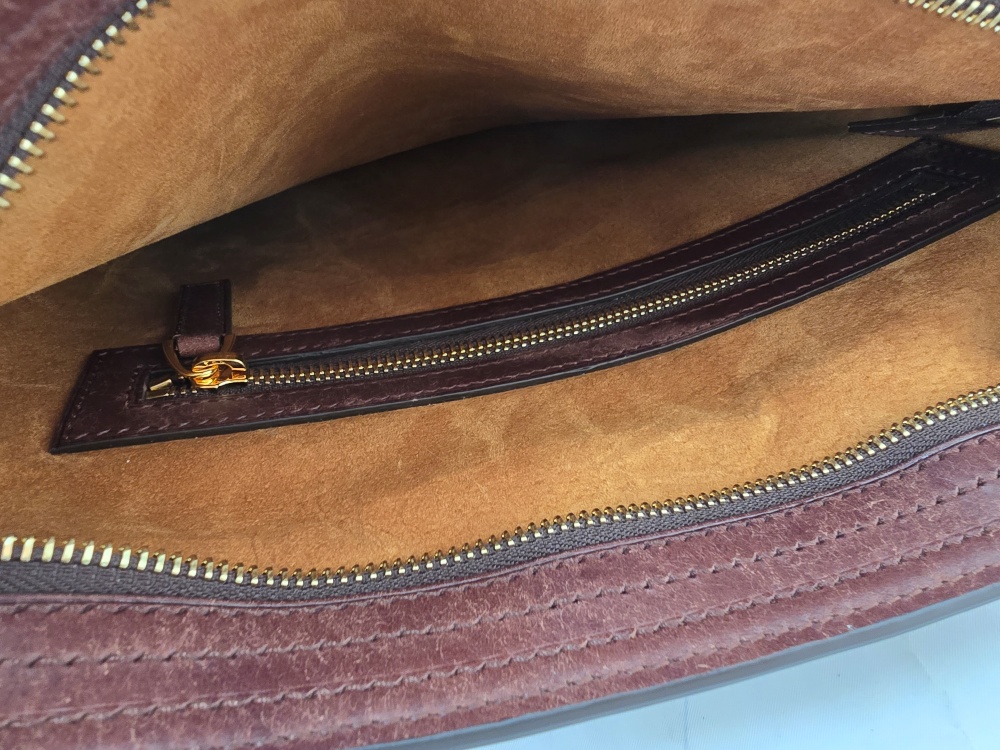
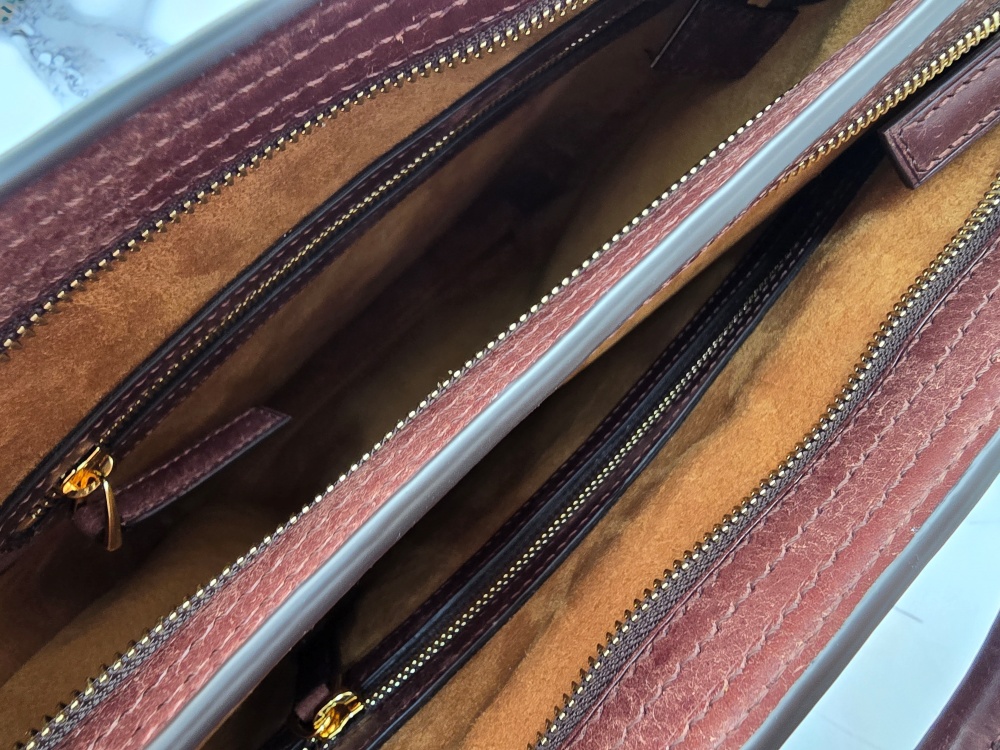
    브라운 가죽가방 내부의 지퍼 포켓과 안감 구조

    Changing the Construction Sequence Can Alter the Opening Alignment

    the leather bag construction sequence, the opening and zipper cannot be worked on independently of the other components. The available working space and alignment references change depending on whether handle reinforcement, zipper attachment, lining assembly, or gusset construction is completed first.

    If the zipper is positioned only after the body and gusset have been fully assembled, there may not be enough room for needles or tools. If the zipper is fixed too early, small length differences created while attaching the gusset may become difficult to correct.

    Before final stitching, check the following points while the components are temporarily bonded or basted.

    • Is the top edge symmetrical when the zipper is closed?
    • Does the opening expand naturally when the zipper is opened?
    • Does either end of the gusset pull the opening to one side?
    • Does the center of the opening sag when the bag is lifted by the handles?
    • Does the zipper slider catch on any thick section?
    • Does the lining interfere with zipper movement after it is installed?

    Any problems found at this stage should be corrected before final stitching and edge finishing.

    A Well-Designed Bag Opening Works Without Drawing Attention

    A well-designed bag opening may not appear visually dramatic. The zipper moves smoothly without excessive force, the opening expands as much as needed, and the top edge returns to its original position when closed.

    Because the opening does not interfere with the bag’s shape and connects the handles, body panels, and gussets naturally, the user rarely notices the structure itself.

    When the opening spreads, the zipper line ripples, or one side tilts, the entire bag can appear less refined than it actually is. Even high-quality leather and hardware cannot compensate for an unstable opening line.

    Leather bag opening design is not simply the step of attaching a zipper. It is a process that determines both usability and structural quality. A stable opening that retains its shape over time can be achieved only when zipper length, gusset tension, skiving thickness, reinforcement coverage, and handle placement are considered as one integrated structure.
  • The Science of Leather Skiving: Taming Fiber Density with Razor Precision

    Shaving the Invisible: Why Skiving is More Than Mere Thickness Control

    To the untrained eye, leather skiving is merely a mechanical task of shaving down the surface to make the hide thinner. However, to a high-end artisan, skiving is a highly sophisticated process of engineering calculations to precisely redistribute structural strength. It serves as the invisible foundational framework that determines whether a bag will maintain its razor-sharp architectural silhouette or slowly collapse from the seams.

    Raw, natural hides exhibit inconsistent structural densities across different quadrants. By utilizing a razor-sharp knife to control this fiber matrix at a microscopic level, the artisan gains absolute command over exactly where the leather must yield flexibly and where it must remain perfectly rigid.


    Key PointKey Point)
    Skiving is not an act of whittling away the essence of the leather; it is a deliberate recalculation of physical thickness to achieve seamless three-dimensional joinery and fluid structural transitions.


    1. Micro-Mechanics: Collagen Fiber Density and Blade Resistance

    Every square millimeter of full-grain leather possesses its own unique internal matrix. The upper grain layer (corium) houses a tightly interwoven network of collagen fibers, exerting immense tensile strength. Conversely, descending toward the lower flesh side, the fibers disperse in a loose and irregular matrix.

    As the skiving knife penetrates this organic web, the blade encounters constantly fluctuating resistance vectors. If the artisan's blade is not polished to a mirror finish, it will fail to shear the fibers cleanly, instead pushing or tearing the loose underlying tissue. Precision skiving initiates with a profound, tactile comprehension of this structural density through the fingertips. The artisan continuously calibrates the knife angle in real time to glide smoothly through the dense fiber walls without inducing structural stress within the leather.

    2. Architectural Technique: The Dichotomy of French Skiving and Standard Beveling

    In premium construction, a simple diagonal bevel is never sufficient. YEGAK classifies this margin control as a strict technical discipline.

    • Standard Edge Beveling: A technique that shears a linear slope at a single angle along the perimeter. It is primarily utilized to reduce the clumsy bulk of raw margins prior to basic stitched joinery.
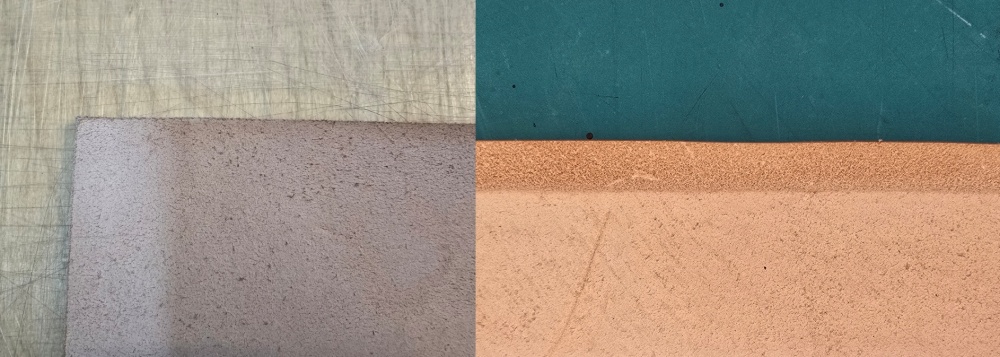
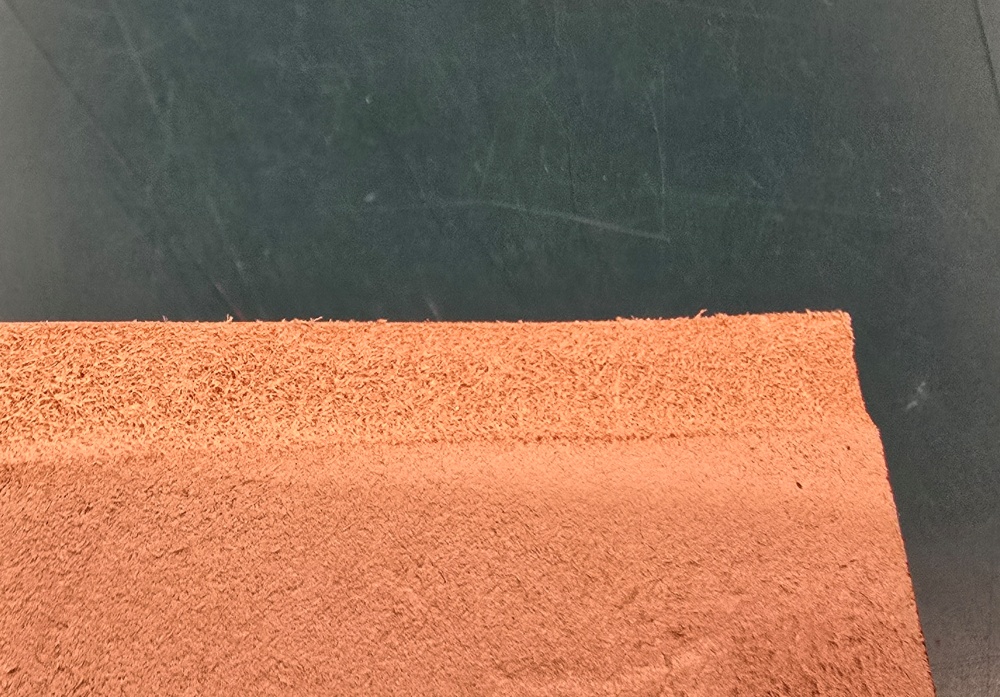
    • French Skiving (Channel Skiving): A highly sophisticated, stepped skiving discipline. The artisan precisely excavates a flat-bottomed rectangular channel into the flesh side of the leather. This is the foundational technique that allows wallet card slots (T-slots) or concealed fold lines to bend with razor-sharp clarity, laying completely flush without protruding clumsily.

    3. Structural Standards: Precise Thickness Calibration for Individual Parts

    A master artisan executes distinct mechanical formulas dictated by the physical stress points concentrated on the bag. Below are the rigid technical benchmarks enforced within the YEGAK curriculum.

    • Folded Edges (Turn-Tops): Margins of a 1.4mm panel are micro-skived down to a 0.6mm gauge, securing an absolute flush interface when folded over.
    • Zipper Terminals: Shaved down sharply to 0.4mm to accommodate the thick canvas fabric of luxury zippers while blocking any clumsy accumulation of bulk.
    • Corner Gussets: Compound skiving is executed across multiple vectors down to 0.5mm to realize complex, three-dimensional curves, allowing the leather to wrap around radiuses seamlessly without creasing.
    • Handle Tabs: As core load-bearing components supporting the bag's full weight, these structures maintain a substantial thickness of 1.2mm to 1.5mm, utilizing minimal beveling to preserve the dense, natural fiber networks.

    Artisan’s Note
    A finely tuned blade exposes the integrity of the tannery. If the leather tissue delaminates or tears apart during a 0.5mm micro-skive, it serves as evidence that the hide lacks the collagen density required to anchor a high-end architecture over the long term.


    4. The Anatomy of Failure: The Structural Cost of Faulty Skiving

    Improper skiving stands as the primary culprit behind the premature structural collapse and diminished lifespan of a handmade leather object.

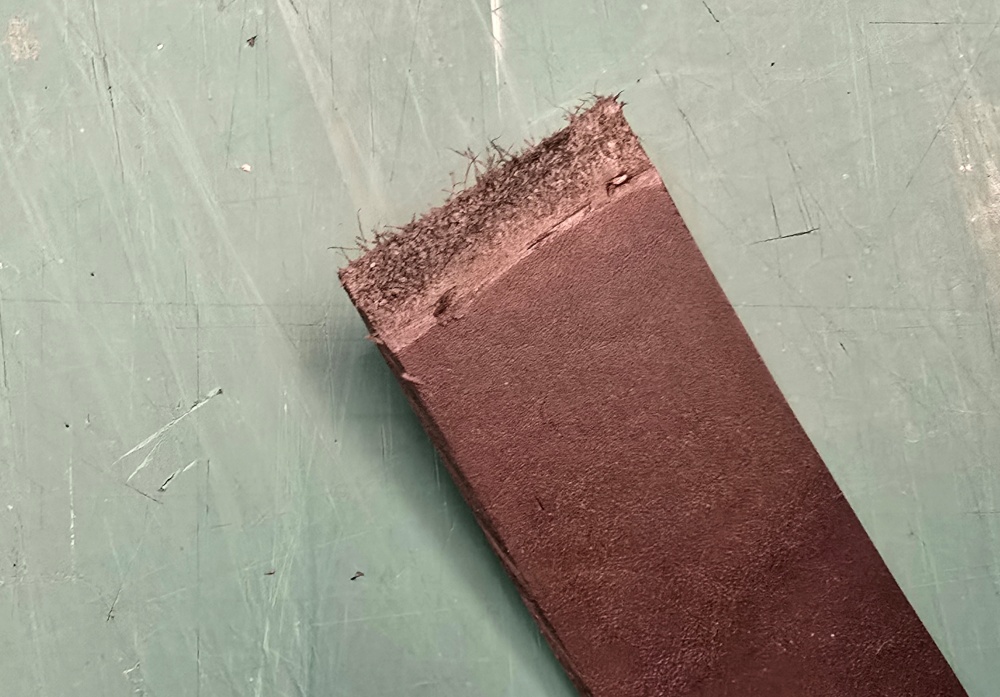
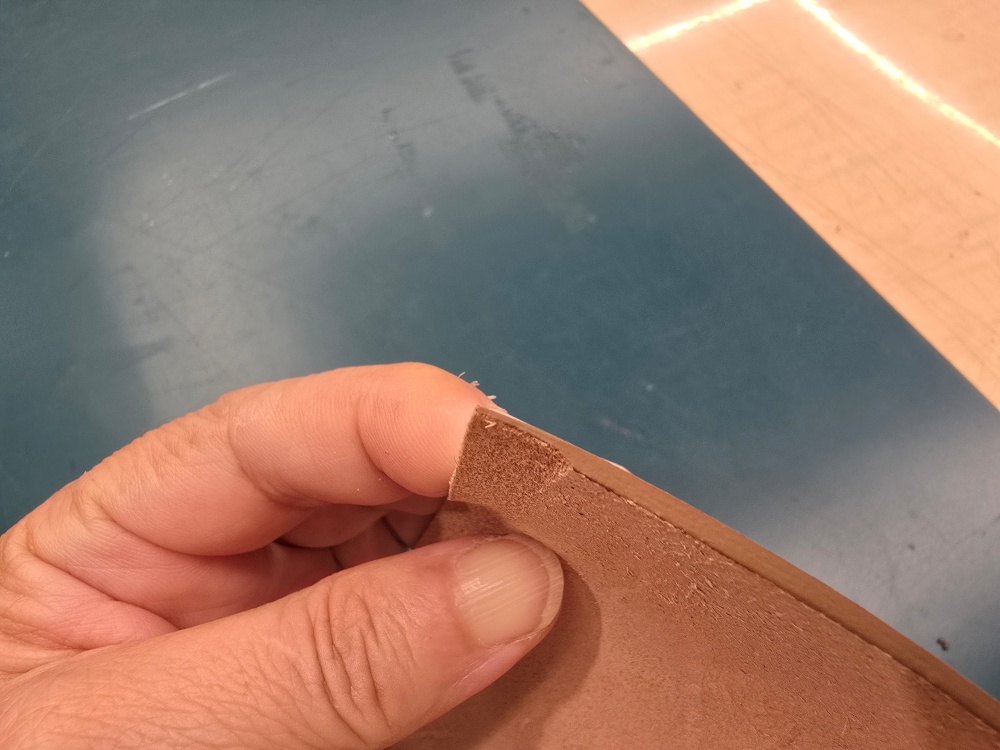
    • The Over-Skived Tear: Shaving a mere 0.1mm too deep cleanly severs the dense corium layer, leaving only weak flesh-side strands. Under physical tension, this boundary inevitably ruptures.
    • The Compressed Wrinkle: A dull blade pushes fibers forward instead of shearing them. This induces a subsurface accumulation of tissue, manifesting on the grain face as irreparable, erratic wrinkling post-assembly.
    • Delamination: An inconsistent, gouged skiving path prevents premium water-based adhesives from forming a continuous molecular bond, triggering catastrophic structural separation when exposed to shifting humidity levels.

    5. Calibrating the Blade: The Equation of Golden Equilibrium

    How does one tame fiber density with razor precision? The artisan continuously calculates three interconnected variables:

    1. Material Moisture Content: The structural elasticity of vegetable-tanned fibers responds sensitively to shifts in atmospheric humidity.
    2. Blade Geometry: The exact angle of the blade's bevel commands the initial resistance threshold encountered upon entering the dense collagen matrix.
    3. Anatomical Grain Direction: Mapping pattern orientation and cutting vectors according to whether the hide quadrant is a rigid shoulder, a dense butt, or a loose flank.

    The YEGAK Knowledge Graph: Internal Link Building

    To command absolute control over high-end architecture, precision skiving mechanics must be flawlessly synchronized with material science and traditional stitch work. Continue your technical evolution:

    • Foundational Asset #1: Review the core chemical architecture of your canvas in [The Ultimate Guide to Vegetable-Tanned Leather].
    • Foundational Asset #2: Master the physics of material thickness in [How Leather Thickness Determines Structural Integrity].
    • Next Technical Discipline: Decoding the Mechanical Tension of Joinery – [The Science of the Saddle Stitch: Secrets of Thread Trajectory and Silhouette Control] (Upcoming Release)
    • Advanced Engineering: Commanding the Geometry of Equilibrium – [Pattern Engineering: Architectural Stability and the Golden Ratio] (Upcoming Release)

  • How Leather Thickness Determines Structural Integrity

    Architectural Language: Why 0.1mm Defines a Masterpiece

    치밀한 콜라겐 섬유 배열을 보여주는 다양한 가죽 두께 프로파일(단면) 비교

    In high-end leathercraft, the thickness of leather is never a mere dimension; it is a core architectural language that determines the structural survival of a design. A variance of just 0.1mm serves as the absolute boundary dividing an unidentifiable, collapsing object from a luxury masterpiece that preserves its golden ratio for decades.

    For the artisan, calibrated control of material thickness is the very first and most rigorous calculation. This guide deconstructs the physical mechanics, micro-skiving techniques, and interlining principles required to evolve a raw hide into a self-supporting leather structure.


    Key Point
    In premium bag construction, leather is treated not as a supple textile, but as a structural beam; a shift of 0.1mm instantly alters the material's mechanical resistance and load distribution.


    1. Material Mechanics: Leather Thickness and Flexural Stiffness

    To build a bag without structural collapse, one must understand flexural stiffness ($D$). In structural engineering, the capacity of a flat surface to resist bending scales exponentially with thickness. This mathematical relationship is non-linear, operating instead as a cubic function ($D \propto t^3$).

    Doubling the thickness of a leather panel increases its resistance to bending and sagging by an overwhelming factor of eight. Conversely, carelessly over-skiving a mere 0.2mm instantly obliterates more than 50% of the leather's natural structural stiffness. This is precisely why a YEGAK artisan never works by intuition; we rigorously analyze the tissue density of European calfskin to determine the exact thickness required to defy gravity.

    2. The Structural Blueprint: Optimal Dimensions Across Leather Genres

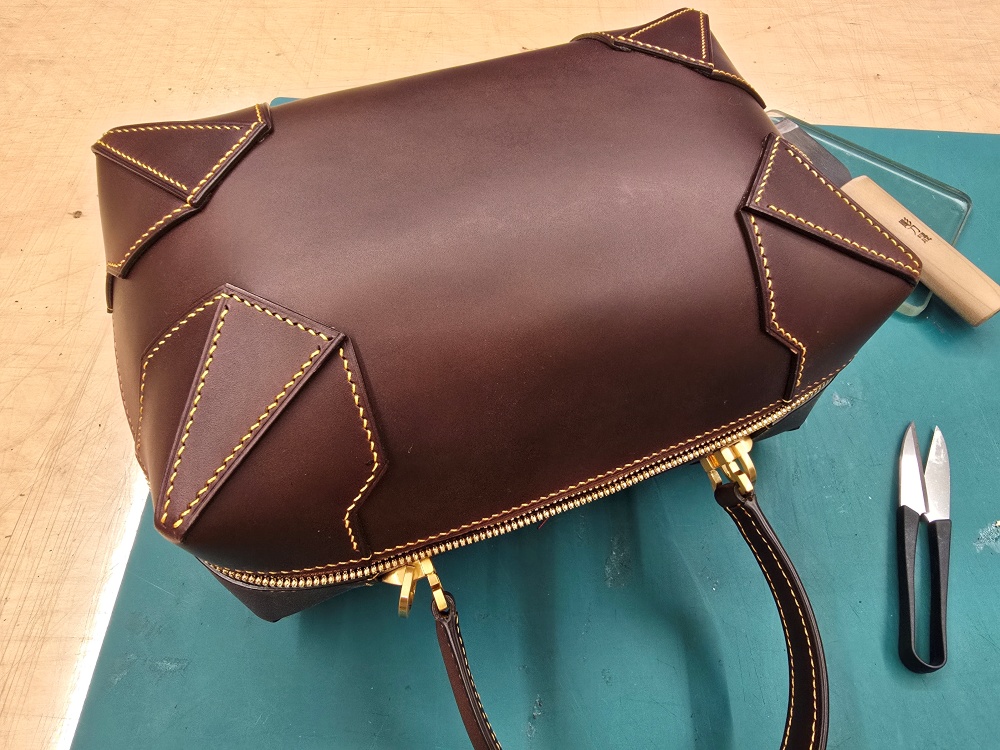
    장인의 작업대 위에서 구조를 잡아가는 중인 핸드메이드 가죽 박스백

    Every leather object demands its own mechanical equilibrium. Below are the rigid thickness standards enforced within the YEGAK curriculum to reconcile structural durability with artisanal refinement.

    • Small Goods (Card Wallets, Pouchettes): Exterior panels must be precisely calibrated between 1.2mm and 1.5mm to yield a firm, resilient tactile experience. Internal card slot layers are skived down to 0.6mm–0.8mm, ensuring the wallet does not bulge clumsily when cards are inserted.
    • Tote Bags & Unlined Daily Bags:
      Main body panels require a substantial weight of 1.5mm to 1.8mm. Within this threshold, the bag achieves an elegant, organic drape without forfeiting its structural perimeter silhouette.
    • Structured Boston Bags:
      The principal architectural walls are maintained at 1.2mm to 1.4mm, mechanically coupled with a deliberately engineered interlining core. The base panel, which bears the entire load vector of the bag, demands a full-grain leather base of at least 2.0mm.
    • Rigid Box Bags & Doctor's Bags:
          To securely anchor a heavy internal frame and execute razor-sharp, three-dimensional geometric corners, the core gussets command an uncompromising thickness of 1.8mm to 2.2mm.

    3. Micro-Skiving: The Art of Seamless Three-Dimensional Joining

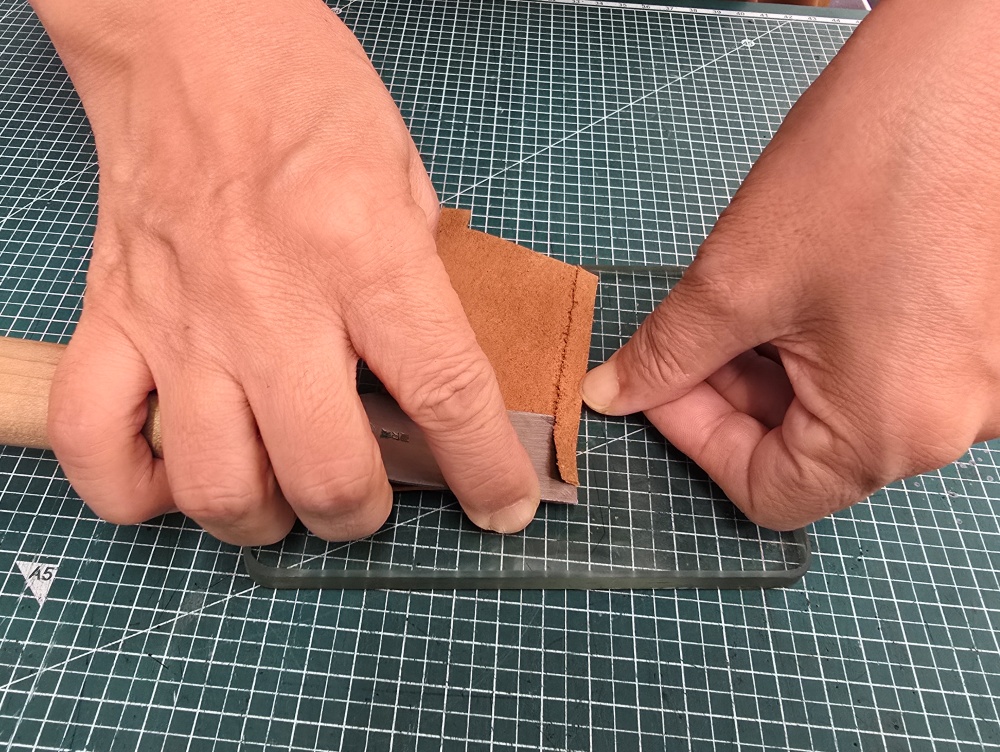
    날카로운 구두칼(피할도)을 이용한 베지터블 가죽의 정밀 수동 에지 피할 공정

    Raw hides delivered from tanneries exhibit inconsistent thicknesses across different quadrants; precision skiving is mandatory to tame these deviations. High-end assembly mechanics demand exacting French skiving and micro-edge beveling.

    Shaving the margin of a 1.4mm panel down to a seamless 0.6mm taper allows the artisan to fold the edge over itself, yielding an ultra-sleek joinery interface free of clumsy bulk. A flawed thickness ratio where two panels intersect introduces internal structural tension, which, over time, warps the stitch lines and stresses the thread matrix. Proper micro-skiving is the sole method to render all seams completely flush and structurally continuous.


    Artisan’s Note
    A finely tuned utility knife exposes the true structural integrity of the hide. If the leather warps or tears during a 0.5mm edge skive, it stands as proof that the hide lacks the collagen density necessary to anchor high-end architecture.


    4. Synergizing Core Materials: Interlining Engineering

    명품 가방 조립을 위해 준비된 프리미엄 구조 보강재와 레더보드(L/B)

    Thickness alone cannot solve every architectural challenge; natural leather remains an organic skin that inherently yields to tension under sustained humidity and physical stress. To secure permanent geometric stability, the artisan strategically pairs skived leather with specialized European interlinings.

    • Leatherboard (Salpa / LB): Composed of compressed recycled leather fibers, it bonds with 1.0mm leather to replicate the dense, rigid hand-feel of a 2.0mm panel without adding excessive weight.
    • High-Density Texon: An unyielding cellulose matrix inserted like a mechanical heart inside bag bases or rigid handle structures to guarantee shape retention.
    • Premium Latex & Microfiller: Layered beneath a 1.2mm side panel, these materials provide a luxurious, high-resilience spring-back memory, completely preventing the panel from premature sagging or creasing.

    5. The Artisan's Criterion: Calculating the Golden Equilibrium

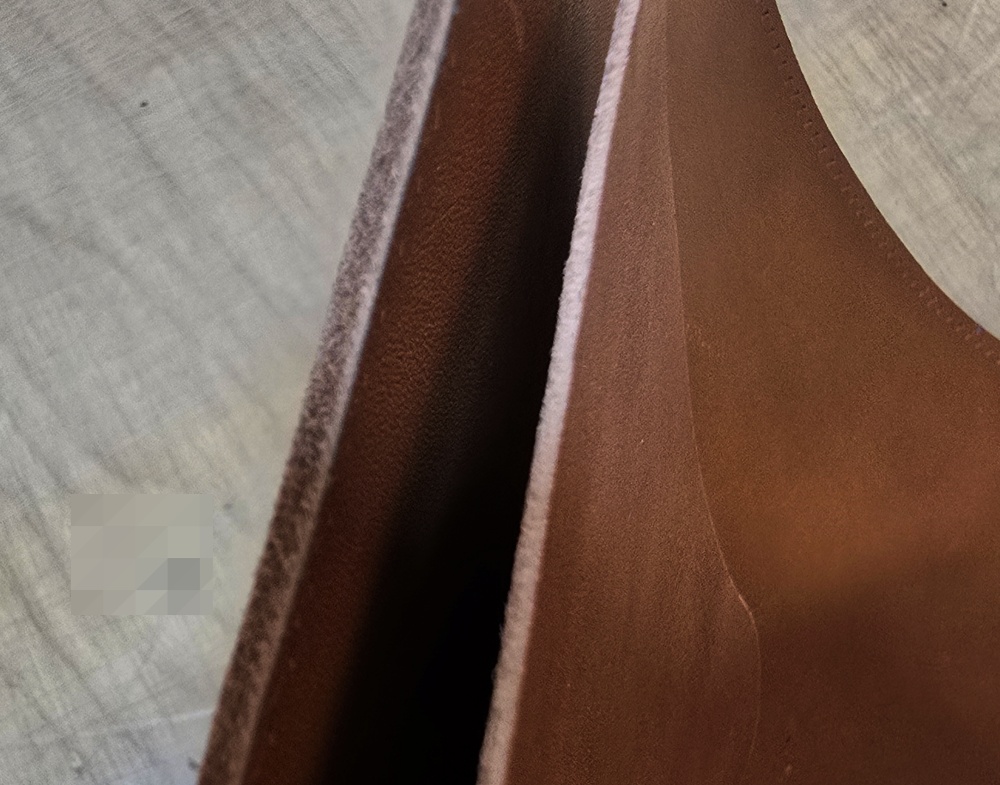
    구조적 패널 위에 유리처럼 매끄럽게 마감되고 밀봉된 완벽한 가죽 단면(에지)

    How does a master artisan close the final structural equation? We evaluate three organic variables:

    1. Tannage Type: The structural rigidity inherent in a 1.2mm vegetable-tanned leather is often significantly superior to that of a supple 1.8mm chrome-tanned leather.
    2. Grain and Fiber Direction: Cutting patterns parallel to the animal's spine yields maximum resistance against distortion; utilizing the belly region demands additional structural reinforcement or thickness compensation calculations.
    3. Intended Silhouette: Mapping with perfect clarity the fluid zones where the bag must organically yield to movement, versus the rigid architectural vectors that must remain permanently fixed.

    🌐 The YEGAK Knowledge Graph: Recommended Reading

    To command absolute control over high-end architecture, material thickness must be perfectly synchronized with professional mechanics and geometric design. Continue your technical evolution through our official curriculum:

    • Foundational Asset: Review the chemical foundations of structural rigidity in [The Ultimate Guide to Vegetable-Tanned Leather].
    • Next Technical Discipline: Mastering Blade Physics - [The Science of Leather Skiving: Taming Fiber Density with Razor Precision] – Upcoming Release
    • Advanced Engineering: Decoding the Geometry Behind Structural Equilibrium - [Pattern Engineering: Architectural Stability and the Golden Ratio] – Upcoming Release

  • The Ultimate Guide to Vegetable-Tanned Leather

    Structural Logic and Material Mechanics for High-End Leather Crafters

    예각 가죽 스튜디오의 작업대 위에 놓인 프리미엄 풀그레인 베지터블 태닝 가죽 원장

    If leathercrafting is defined merely as the act of cutting, punching, and stitching leather according to a pre-existing pattern, then a deep technical understanding of the material might be an unnecessary luxury. However, if your goal is to engineer a timeless masterpiece that preserves its structural stability for decades, the beginning of every design equation must unquestionably be Vegetable-Tanned Leather.

    This guide deconstructs the true mechanics and physical proportions hidden beneath artificial coatings, demonstrating the structural essence of why high-end artisans reject the convenience of mass production to demand this challenging material.


    1. Chemical Processing vs. Botanical Properties (Chrome vs. Vegetable)

    To master a material, one must first understand the essence of its creation. Today, over 90% of the leather circulated in the global market is Chrome-Tanned Leather. This method utilizes chemical agents such as chromium sulfate and heavy mineral salts to complete the tanning process en masse in a matter of hours. While chrome leather is highly advantageous for mass production—being lightweight, supple, and resistant to stains—it chemically alters the protein fiber structure within the hide completely. This alteration eradicates the leather’s inherent "structural memory," rendering it impossible for an artisan to mechanically control, shape, or set the form using traditional hand-tooling techniques.

    천연 베지터블 태닝 가죽 표면에 그대로 드러난 자연스러운 상처와 성장 주름

    Conversely, Vegetable-Tanned Leather relies exclusively on plant-derived, natural tannins extracted from tree bark, chestnut fruits, quebracho wood, and mimosa leaves. Hides are submerged in traditional wooden vats, aging slowly over weeks or up to six months as the tannin concentration is gradually increased. This slow, deliberate process preserves the natural collagen fiber networks of the hide, binding them into an even tighter, more rigid matrix.

    As a result, because vegetable-tanned leather lacks a synthetic plastic or polyurethane coating, the animal's natural stretch marks, wrinkles, veins, and healed scars remain fully visible on the surface. Far from being flaws or defects, these natural marks serve as the most noble certificate of authenticity, proving the material is no synthetic imitation, but a unique canvas gifted by nature.


    2.The Structural Logic of High-End Design (Construction Logic)

    An artisan’s decision to select vegetable-tanned leather on the workbench is never born from mere vintage sentimentality or the abstract notion of craftsmanship. It is a precise engineering calculation that balances mechanical properties with long-term structural durability.

    ① Dense Fiber Structure and Plasticity

    Premium vegetable-tanned leather possesses an overwhelmingly higher internal fiber density compared to chemically processed alternatives. When cased with water, the rigid collagen fiber networks temporarily soften, preparing the material to accept pressure and molding. As the moisture evaporates, the leather exhibits true plasticity, permanently memorizing and setting the curves, sculptural volumes, and three-dimensional architectures intended by the artisan. This precise mechanical property is the sole engine that allows a doctor's bag to retain its crisp, rigid frame, or prevents a Boston bag's generous volume from collapsing over time.

    마스터 장인의 정밀한 수동 피할과 전통 방식의 단면 슬리킹(마감) 과정

    ② Precision Skiving and Edge Finishing Properties

    Leathers with loose, erratic fiber structures stretch and warp when meeting a skiving knife, rendering microscopic thickness control impossible. In contrast, the tightly knit architecture of vegetable-tanned leather permits manual bevel skiving accurate to 0.1mm increments, perfectly eliminating the bulk at overlapping seam allowances.

    Furthermore, during the edge-sleeking process, these dense fibers compress under frictional heat, fusing into a glass-like, rigid burnish without requiring a single drop of chemical paint. Finished solely with Tokonole or natural resins, this edge will never harden, crack, or peel away with age—representing an uncompromised realm of craftsmanship that synthetic edge paints can never replicate.


    3. Aging (Patina): The Design Philosophy Completed by Time

    Chrome-tanned leather is at its peak aesthetic on day one out of the factory; as time flows, its synthetic coating scratches, peels, and degrades into a weary obsolescence. Vegetable-tanned leather, however, initiates its true design and narrative the moment it leaves the artisan’s bench to meet the user's hands.

    시간이 흐르면서 핸드메이드 베지터블 가죽 제품에 완성된 아름다운 호박색 광택(파티나)과 경년변화

    Through contact with the user's natural oils, daily exposure to sunlight, and friction, the rich waxes deeply infused within the core rise gracefully to the surface, developing a deep, translucent patina. As decades pass, the architecture softens organically to adapt to the owner's habits, yet the structural bones of the bag settle into an even firmer stance. The "20-Year Living Asset" envisioned by YEGAK is defined exactly by this endurance—a durability that converts the passage of time into an appreciation of value.


    4. The Artisan's Criterion: Engineering the Balance of Thickness and Interlinings

    No matter how extraordinary a full-grain vegetable leather from an elite European tannery may be, faulty panel allocation or flawed thickness design will cause a bag to either collapse or become as heavy as a stone. The master artisan must continuously calculate the equation between the leather's tensile resistance and the total weight distribution.

    • Small Goods (Card Wallets, Clutches, Passport Cases): Internal stiffeners are minimized or completely omitted to maximize the inherent resilience of the leather itself. Exterior panels are skived precisely between 1.2mm and 1.5mm, while internal linings and card slots demand a highly disciplined ratio of 0.6mm to 0.8mm to preserve a slim, functional profile.
    • Structural Bags (Boston Bags, Totes, Briefcases): The base panel that anchors the entire load and the spine backings that command the structural center must utilize a weighty, unyielding foundation of 1.8mm or higher. Conversely, side gussets requiring turn-out construction or complex arched contours should be skived to approximately 1.0mm, then mechanically coupled with high-resilience French leatherboard (LB) or natural latex interlinings to prevent sag and maintain golden proportions over time.
    건축학적 실루엣과 황금 비율을 완벽하게 유지하는 견고한 핸드메이드 가죽 사각 박스백

    Connecting to the Next Discipline (YEGAK Knowledge Graph)

    Having understood the material's essence and mechanical qualities, it is time to progress toward the artisan's tools and the precise techniques that tame these dense fiber networks. Our interconnected curriculum continues below:

    • [Tool Encyclopedia] The French Pricking Iron: Proper Grip and Power Mechanics for Piercing Dense Fibers
    • [Construction Technique] The Equation of Thread Tension and Material Resistance: The Traditional Saddle Stitch Slanted Formula
    • [Design Theory] The Golden Proportion of Luxury Bags: Structural Stability and Warp-Free Pattern Balance