In leathercraft, thread is not simply a material for connecting pieces of leather. The thickness of the thread and the spacing of the stitches change the impression and balance of the bag, determining how refined the finished piece looks.
Even with the same leather and the same pattern, the stitches can look delicate, overly heavy, or sparse depending on which thread and chisel you choose.
To create good stitches, you shouldn't just choose the thread thickness; you must judge the chisel spacing, leather thickness, and the size of the piece as a single proportion.
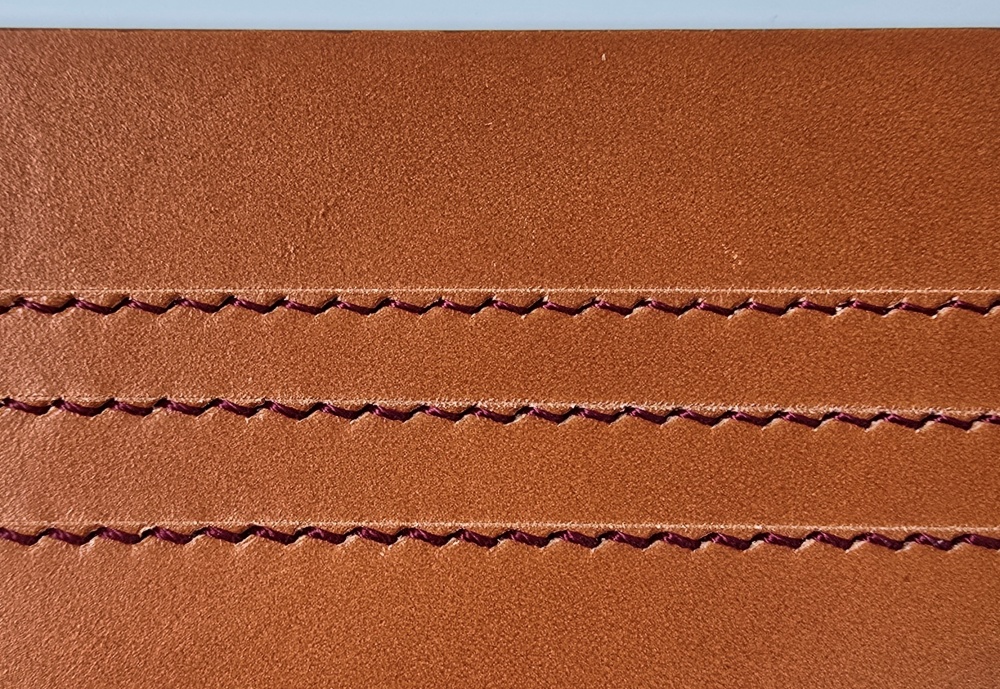
Thread Thickness Cannot Be Chosen in Isolation
Using a thick thread makes the stitches look distinct and gives them a strong presence. However, if only the thread becomes thicker while the chisel spacing remains narrow, the stitches may push against each other, looking cramped, or the area around the holes may be unnecessarily emphasized.
Conversely, a thin thread creates a delicate and calm impression, but if the chisel spacing is too wide, the stitch line may appear disconnected or give an impression of lacking strength compared to the size of the piece.
Thread is not necessarily more luxurious just because it's thicker, nor more precise just because it's thinner. The most appropriate thread is the one that naturally suits the size of the piece, the thickness of the leather, and the stitch spacing.
When choosing a thread, you should first look at the proportion the thread will occupy at the edge of the leather after stitching, rather than the thickness of the thread itself.
Chisel Spacing Creates the Rhythm of the Stitches
Chisel spacing determines the speed and rhythm at which the stitches are repeated. If the spacing is narrow, the stitches become dense, creating a delicate impression. If the spacing is wide, each stitch becomes clearly visible, creating a more relaxed and powerful atmosphere.
Characteristics of Narrow Chisel Spacing
- It suits small items like small wallets or cardholders well.
- It is great for creating a refined impression when using thin leather and relatively thin thread.
- Using it with thick thread can make the stitches overly dense.
Characteristics of Wide Chisel Spacing
- It suits large and structural parts like bags or handles well.
- When combined with a moderately thick thread, it can highlight the presence of the stitches.
- Using a thread that is too thin can make the spaces between the stitches look empty.
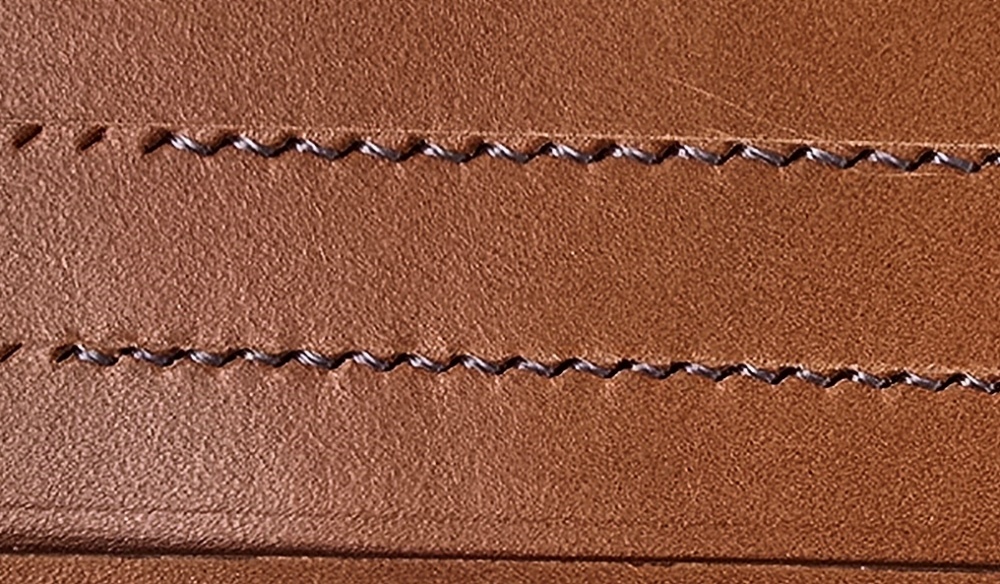
Even if the indicated spacing of the chisel is the same, the actual impression of the stitches can vary depending on the shape of the blade, the size of the hole, and the angle at which the chisel is struck. Therefore, rather than choosing a chisel based solely on numbers, it is safer to confirm it through an actual test stitch.
How to Understand Vinymo MBT Numbers and Thread Thickness
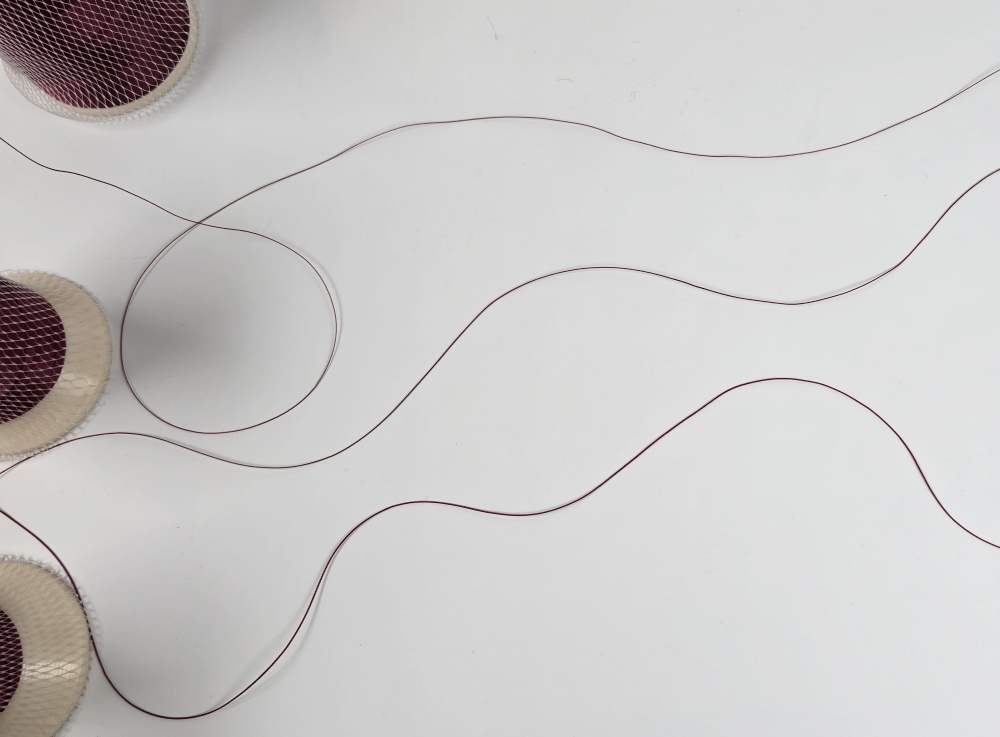
Vinymo MBT is a thread I frequently use when making actual bags and accessories. The twist does not unravel easily, and the condition of the thread remains relatively stable during stitching, making it useful for repetitive work.
For Vinymo MBT, the thread generally becomes thicker as the number gets smaller. For example, #8 is thinner than #5, and #1 is thicker than #5.
However, you should not determine the thread based on the number alone. Even with the same number, the impression of the finished stitches can vary depending on the thread's color, wax treatment, pulling tension, and the needles and chisels used.
The reason use Vinymo MBT more oftenis not simply because the thread is strong. It is because it is easy to predict the condition of the thread during work and good for maintaining a consistent balance in the finished stitches.
Look at the Final Thickness, Not Just a Single Piece of Leather
A common mistake when determining thread thickness is to only look at the thickness of a single piece of leather. However, in actual bag making, leather is often folded, reinforcements and linings are added, and multiple layers of leather are stacked.
Therefore, when choosing a thread, you should judge based on the final thickness of the part to be stitched, not a single piece of cut leather.
- How many layers of leather are stacked?
- Are folded parts or reinforcements included?
- Do the stitches play a role in holding the structure?
- Are they stitches to be emphasized decoratively?
- What is the overall size of the finished piece?
If you choose a thick thread looking only at a single thin piece of leather, the stitches may become overly heavy in the finished stage. Conversely, using a thread that is too thin on thick handles or parts where multiple layers overlap can make the stitches look weak relative to the structure.
Test Stitching is the Smallest Design Process
Before striking the chisel directly on the finished product, it is advisable to do a test stitch on a scrap of the same leather. If possible, you should stack the same number of leather pieces as the actual production part and prepare the gluing and edge finishing similarly.
During the test stitch, check the following items:
- Is it too tight when the thread passes through the chisel hole?
- Does the leather surface pucker or do the holes gape when the thread is pulled?
- Is the angle of the stitches consistent on the front and back?
- Is the thread thickness too strong or too weak compared to the size of the piece?
- Does the spacing of the stitches connect naturally even on curved parts?
You should also examine the relationship between the awl hole size and stitch qualityEven if the proportion of the thread and chisel is appropriate, if the holes are too large or inconsistent, the stitch line will not remain neat.
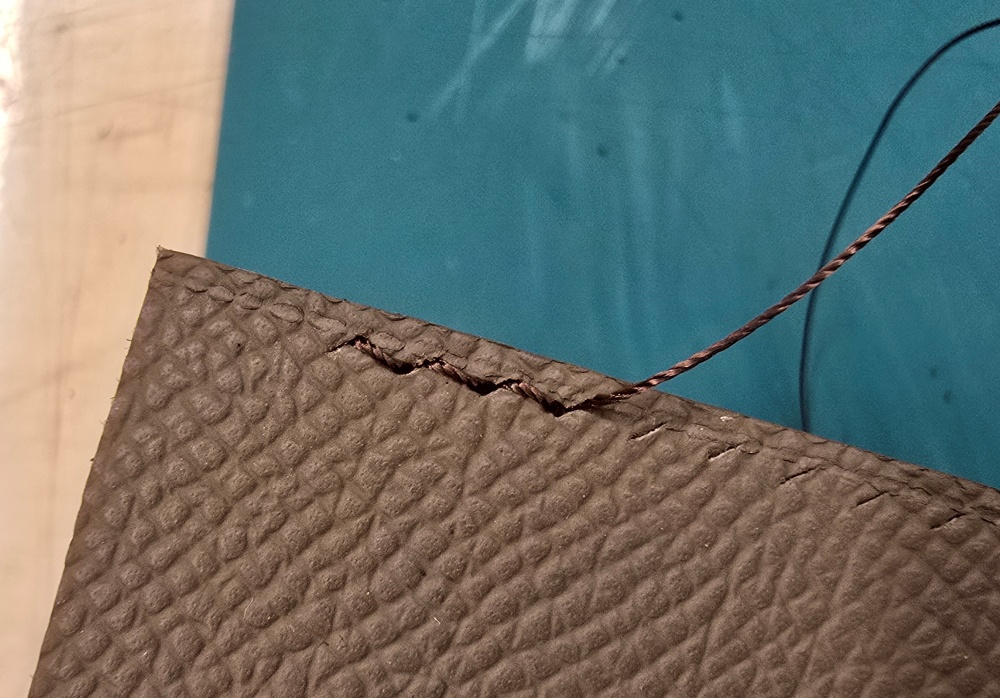
Test stitching is not a process that wastes materials. It is a design process that discovers potential proportional errors in the finished product at the lowest cost.
Adjusting the Presence of Stitches According to the Size of the Piece
In small accessories, a single stitch takes up a large proportion of the overall design. Therefore, using relatively thin thread and narrow spacing is good for creating a delicate and calm impression.
On the main body of a medium-sized bag, the thread and chisel should not be overly conspicuous while stably tidying up the leather edges. Here, it is important to look at the thickness of the leather and the location of the stitches together to find a medium proportion.
For handles, strap connections, and outlines that emphasize structure, you can utilize relatively thick thread or wide spacing. However, since using thick thread does not necessarily increase durability, the size of the holes and the stitching tension must also be adjusted.
Good Stitches Do Not Stand Out Before the Bag
Refined stitches certainly elevate the perfection of a bag. However, if the stitches are revealed too strongly, the stitch line may be seen before the shape of the bag and the texture of the leather.
Rather than showing off, good stitches tidy up the edges of the leather, follow the lines of the pattern, and quietly support the structure of the bag.
Choosing thread thickness and chisel spacing is not a simple material selection, but a process of designing the proportions of the entire bag.
Rather than memorizing the numbers of threads and chisels like a correct answer, you need the habit of looking at the final thickness of the leather, the size of the piece, and the role the stitches will play together. That small difference in judgment changes the impression of the finished bag and creates stitches that look stable even as time passes.
Leave a Reply