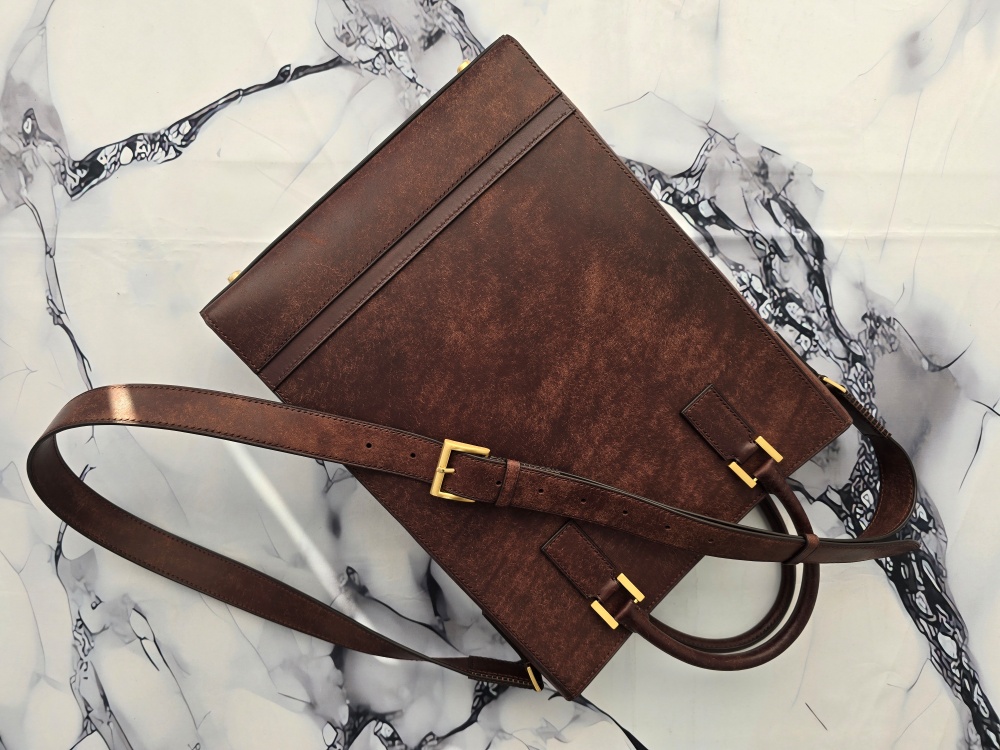
When examining a finished leather bag, many people first notice the leather’s color and surface or eye-catching elements such as the hardware. A maker looks at it differently. Before judging the beauty of individual components, a maker first checks whether the entire bag comes together naturally as a single structure.
The overall quality of a bag does not improve simply because one area has been made with precision. A stable result emerges only when the body panels, side panels, opening, handles, bottom, stitching, and interior organization all work toward the same structural and functional goal.
Craftsmanship is not about perfecting each component in isolation. It is the state in which every component works toward the same form and purpose.
1. The Overall Silhouette Should Read Clearly at a Glance
When looking at a bag for the first time, examine its overall outline before focusing on decorative details. Check whether the width of the top and bottom, the height of the body, and the size and placement of the handles are in proportion. On a rectilinear bag, the outer lines should flow steadily without unintended twisting or a visual pull to one side.
In the bag shown here, the straight body panels contrast with the rounded handles, while the brown leather contrasts with the gold-toned hardware. What matters is not how decorative each element is, but whether the straight lines and curves are organized within a coherent proportion.
The reinforcement design that supports the bag’s shapemust be properly planned. Otherwise, the bag may look straight immediately after completion, but its opening and body can deform in different directions with use.
2. The Side Profile Reveals the Balance Between Capacity and Form
The side panel determines the bag’s actual capacity. No matter how beautiful the body panels are, an excessively narrow side panel can cause the opening to spread when the bag is filled. If it is too wide, the bag may lose its shape more easily when empty.
The line where the gusset meets the body must also be examined. The angle of the side panel, the flow of the joining lines, and the transitions around the corners should feel natural so that the front and side come together as a unified three-dimensional form. The side view in the photograph shows how the layered construction is connected and how leather lacing is used at the joint.

3. The Opening Should Retain Its Structure When Open
The opening is where appearance and usability directly meet. A straight line when the bag is closed is not enough. When the zipper is opened, the top should not collapse excessively and the interior should remain easy to see.
If the bag has multiple compartments, check whether the zipper lines interfere with one another. A twisted zipper track or an opening pulled toward one side can affect both the feel of opening and closing the bag and the silhouette of its upper section.
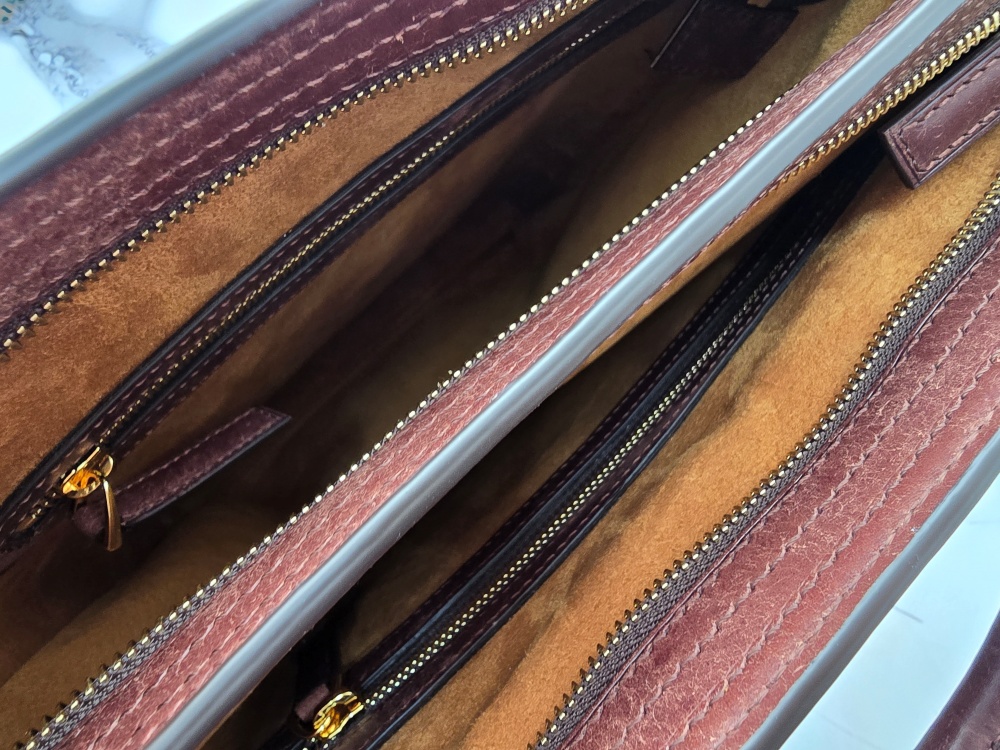
The bag shown here has several zippered compartments arranged side by side. In this type of construction, the spacing and height of each opening, along with the finishing around the zipper ends, affect the overall quality.
4. Handle Attachments Are the Starting Point of the Load
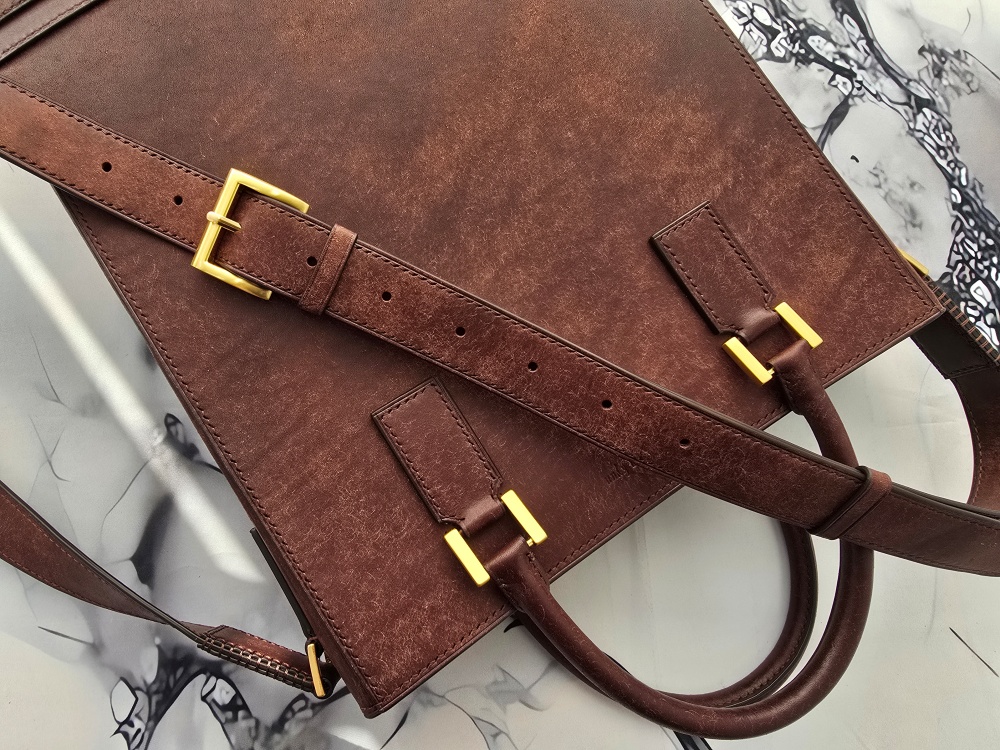
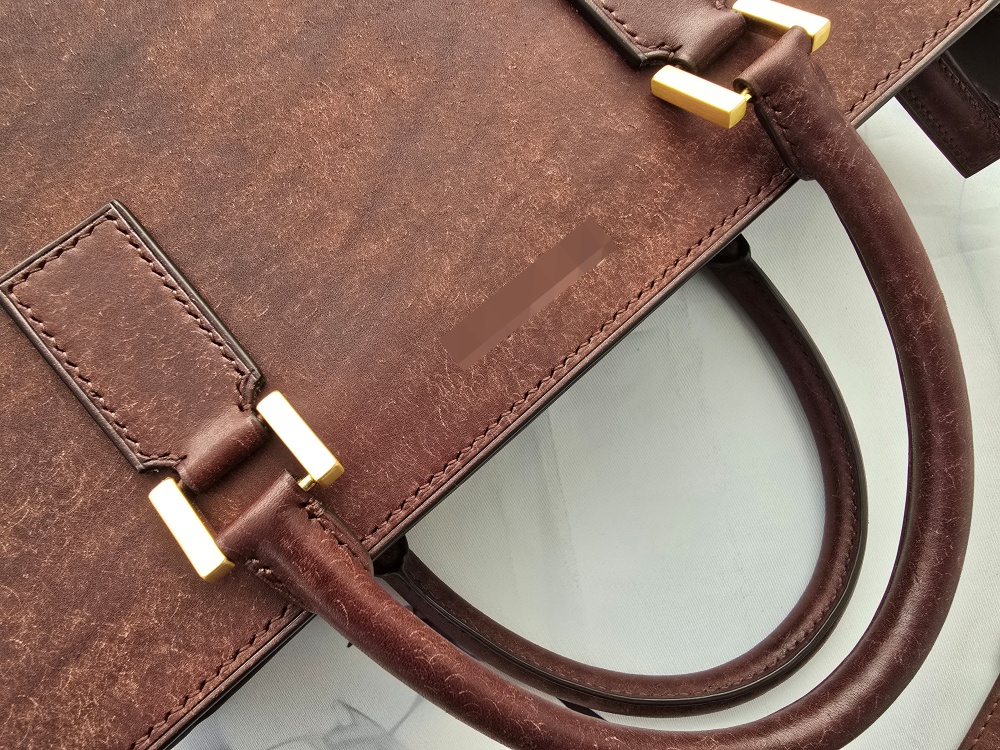
The handles are among the first parts to receive the bag’s weight. Examine not only the shape of the handles but also their attachment positions, the reinforced areas around them, and the way the metal fittings are joined.
If the spacing or height of the left and right handles differs, the body may tilt to one side when the bag is carried. Even when the hardware is visually refined, concentrating the load over a small area can eventually stretch the leather or cause the attachment area to lift.
After completion, do not evaluate only the empty bag. Add the weight of typical contents and check whether the handle attachments distribute the load evenly and remain stable.
5. Stitching and Edge Lines Reveal Each Other’s Irregularities
Along the outer edge of a bag, the stitching line and edge line run side by side. Because they are so close together, any irregularity in one makes imperfections in the other more noticeable.
Stitch spacing is not the only factor to inspect. Check whether the stitching remains a consistent distance from the leather’s edge, whether the spacing changes suddenly around corners, and whether the thread compresses the leather too tightly or sits too loosely.
The edge finish should also follow the outline smoothly, without the coating building up more heavily on one side. The repeated process of sanding and applying edge paintis not merely a way to cover the raw edge. It is part of the process of completing the bag’s outline together with the stitching line.

6. The Bottom Determines the Bag’s Overall Stance
The bottom directly supports the weight of the bag and its contents. Place the bag on a flat surface and check whether it rocks from side to side, whether all four corners meet the surface at the same height, and whether the bottom panel bends toward one side.
The placement of bag feet also matters. If they are positioned too far inward from the edges, they may not adequately protect the bottom corners. If they are installed at different heights, the bag may not stand securely.
The line where the bottom meets the body should also remain straight so the bag appears stable from the front. Although the bottom is not highly visible, it is the foundation that supports the entire silhouette.

7. Inside the Bag, the Order of Use Matters More Than Appearance
The interior cannot be judged only by the color or texture of the lining. Check whether frequently used items are easy to see when the bag is opened, whether the height and width of the pockets suit actual belongings, and whether the zippers can be operated with one hand.
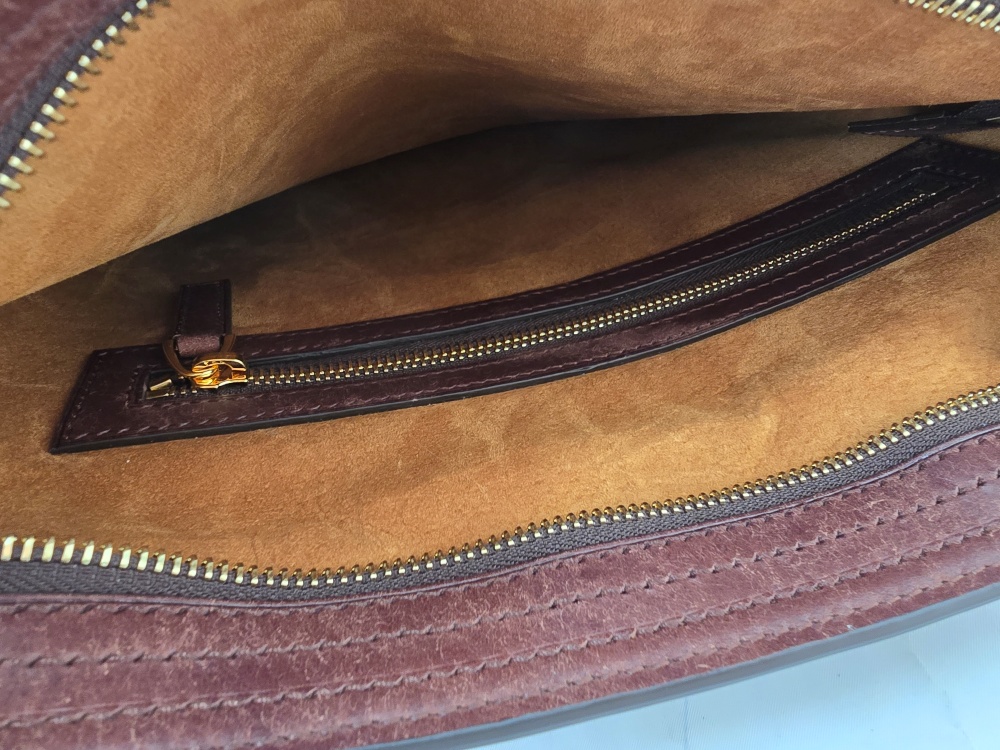
An interior zippered pocket may be used less often if its opening is too narrow or if it is positioned too deep inside the bag. If it is placed too high, the pocket and the main contents may interfere with each other when the bag is opened.
In a construction where the main compartment and zippered pocket are clearly separated, as shown here, examine not only the pocket placement but also whether the lining bubbles or is pulled under excessive tension.
Photographic Inspection Should Be Followed by a Real-Use Test
Finished-product photographs are useful for documenting overall proportions and surface finishing, but they cannot reveal every aspect of a bag’s quality. Changes under load, the feel of the zippers, and the bag’s balance when filled must be tested through actual use.
After completion, it is helpful to test the following points in practice
- Does the empty bag stand securely on a flat surface?
- Does the opening retain its shape after frequently carried items are placed inside?
- Do all the zippers move smoothly from beginning to end?
- Is the load distributed evenly across the handle and strap attachments?
- Does the bag remain level when carried?
- Can the interior pocket be accessed naturally with one hand?
- Do the bottom and corners retain their shape under the weight of the contents?
A practical inspection sequence is the overall silhouette, side profile, opening, load-bearing points, stitching and edge finish, bottom, and finally the interior. Following this order helps prevent important details from being overlooked.
In a Well-Made Bag, Every Line and Structure Works in Agreement
A well-made leather bag is not one in which only a single detail stands out. Its outer contour and handle curves, stitching and edges, opening and interior compartments, bottom and hardware should all work together without conflict toward a unified purpose.
The more decorative and structural elements a design contains, as in the bag shown here, the more important it becomes to examine not only the quality of each component but also the balance of the whole.
The true craftsmanship of a leather bag is revealed when the precision of each stitch seen up close and the stability of the overall silhouette seen from a distance are equally convincing.
Leave a Reply