Many who visit leather ateliers or boutique brands believe that using premium leather alone will guarantee a bag retains its shape forever. It is a vague expectation, often phrased as, "Since it's made from the finest French hide, it will surely last a decade without buckling." However, exterior beauty and structural durability do not automatically correlate.
In the world of high-end bag construction, the true force that sustains the form does not emanate from the visible exterior leather, but from the internal architecture hidden deep within. The secret of a masterpiece that refuses to collapse over time and confidently maintains its original silhouette lies entirely within reinforcement engineering.
1. Why Do Certain Bags Sag After Just a Few Years?
No matter how thick and robust the leather used to construct a bag is, carrying daily essentials while constantly bearing the relentless pull of gravity will eventually stretch the leather's inherent fibrous tissue, causing specific areas to sag or warp. Once a bag loses its architectural integrity, it completely forfeits its dignity as a luxury piece, no matter how pristine the grain remains.
When precise structural engineering to support the internal architecture is omitted, the bag fails to endure the internal payload and drastically reaches the end of its lifespan. Because leather inherently possesses plasticity that softens over time, the sophisticated combination of the right reinforcements to mechanically govern this shifting and stabilize the skeletal frame becomes the ultimate key determining the true longevity of the bag.
2. What Exactly is Reinforcement?
Reinforcements are internal architectural materials bonded between the exterior hide and the lining to impart three-dimensional volume, enhance tensile strength in high-stress zones, and optimize load distribution. The characteristics of the five primary materials predominantly utilized in high-end operations are as follows:
- Leather Board (LB): Produced by reclaiming natural leather fibers, this material keeps the organic flexibility and texture closest to genuine hide while firmly anchoring the surface. It is chiefly deployed on expansive body panels or areas requiring a skeletal structure.
- Texon: Formed by high-density compression of paper pulp fibers, this material yields excellent resilience and highly formidable vertical weight support. Although vulnerable to moisture, it performs exceptionally well when defining crisp, linear edges or preventing the base from sagging under load.
- Salpa: A specialized variant of leather board, characterized by being thinner, denser, and significantly more flexible than standard LB. It integrates organically with sections that must endure subtle tensile stress without compromising the supple hand of the leather.
- Microfiber Reinforcement: Composed of a high-density microfiber web, it is extremely resilient and highly resistant to tearing. Providing formidable durability while adding virtually zero bulk or weight, it is indispensable for anchor points where load concentrates.
- Latex Foam: A rubber-based sponge configuration delivering outstanding resilience and cushioning. It infuses the bag with three-dimensional volume and a plush tactile feel, widely utilized to create luxurious embossing effects or a supple grip.

3. Component-Specific Reinforcement Engineering
Every component of a bag does not endure identical stress. The base facing gravity, the handles frictioned by human hands, and the flap subjected to repetitive opening and closing each demand fundamentally distinct physical mechanics; therefore, utilizing the same reinforcement throughout is strictly forbidden.
- Base: As it must entirely support the weight of internal possessions, a combination of high-density Texon or rigid Leather Board possessing the finest load distribution properties must be deployed to ensure a flat rigidity that prevents the center from sagging over time.
- Handle Anchor Joints: Because the entire payload of the bag concentrates and pulls on this area, non-stretch microfibers or specialized nylon reinforcements boasting extreme tensile strength must be embedded to fundamentally eliminate the disaster of ruptured stitching.

- Opening: This section undergoes frequent structural strain as zippers or magnets open and close. Implementing flexible yet highly resilient Salpa or thin Texon preserves a neat, unwarped linear edge.
- Gusset (Side Panels): This is a three-dimensional architecture that must open and close naturally depending on the contents. Thus, rather than rigid elements, mating flexible latex or thin leather board preserves the organic elasticity of the leather, encouraging smooth, natural curves.
- Flap: Subjected to continuous, repetitive bending and straightening, it must remain free from creasing. Materials like Texon that cannot recover once creased must be excluded; instead, laminating highly resilient Salpa and latex captures both an elegant volume and a smooth opening feel simultaneously.
4. The Perils of Over-Reinforcement
Inserting more material is by no means a superior design. Excessively layering reinforcements drastically escalates the weight of the bag, turning it into an unwearable burden for the user, while entirely neutralizing the warm, supple tactile qualities inherent to genuine leather, leaving it as rigid and coarse as a plastic box.
True engineering rests upon the absolute precision of calculating the thickness, elasticity of the hide, and the intended purpose of the finished bag to embed the minimal thickness exactly where it is demanded. Reinforcement should never dominate the leather; rather, it fulfills its true duty only when staying silently hidden behind the hide, maximizing the natural majesty of the material.
5. YEGAK's Reinforcement Philosophy: Mechanical Equilibrium of Weight and Longevity
Before cutting leather at my workbench, I first sculpt the deployment architecture of the reinforcements three-dimensionally in my mind. Mindlessly abusing Texon in any structure under the pretext of securing structural longevity is nothing less than artisan laziness. While Texon is brilliant at holding sharp lines, it carries a high risk of inducing leather hardening and warping if it traps moisture within a sealed interior; hence, I strictly ration the use of Texon on gussets prone to shifting or zones undergoing intense twisting.
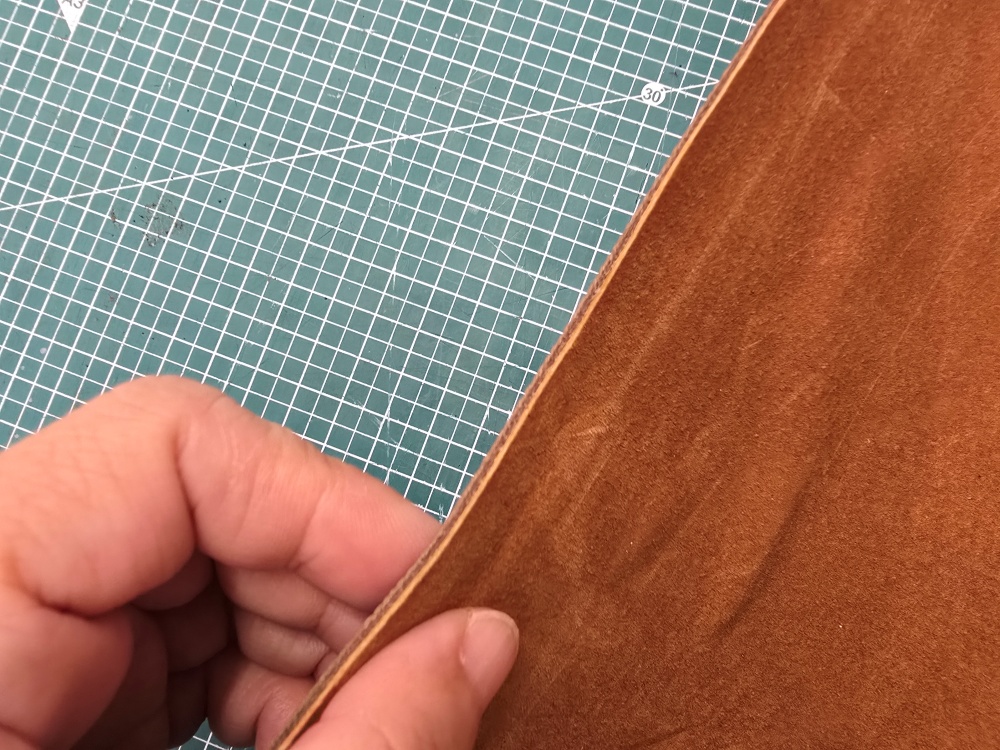
Instead, anchored by extensive experience, I adhere to a discipline of laminating high-end Leather Board (LB)—which closest mimics the density of natural leather—by skiving it down to decimal millimeter units. Anticipating the trajectory of gravity the bag will endure, and even calculating the speed at which the hide will soften as it ages over the years to control the reinforcement thickness manually—this is the perfect equilibrium of weight and durability pursued by YEGAK, and our uncompromising technical pride.
6. Conclusion
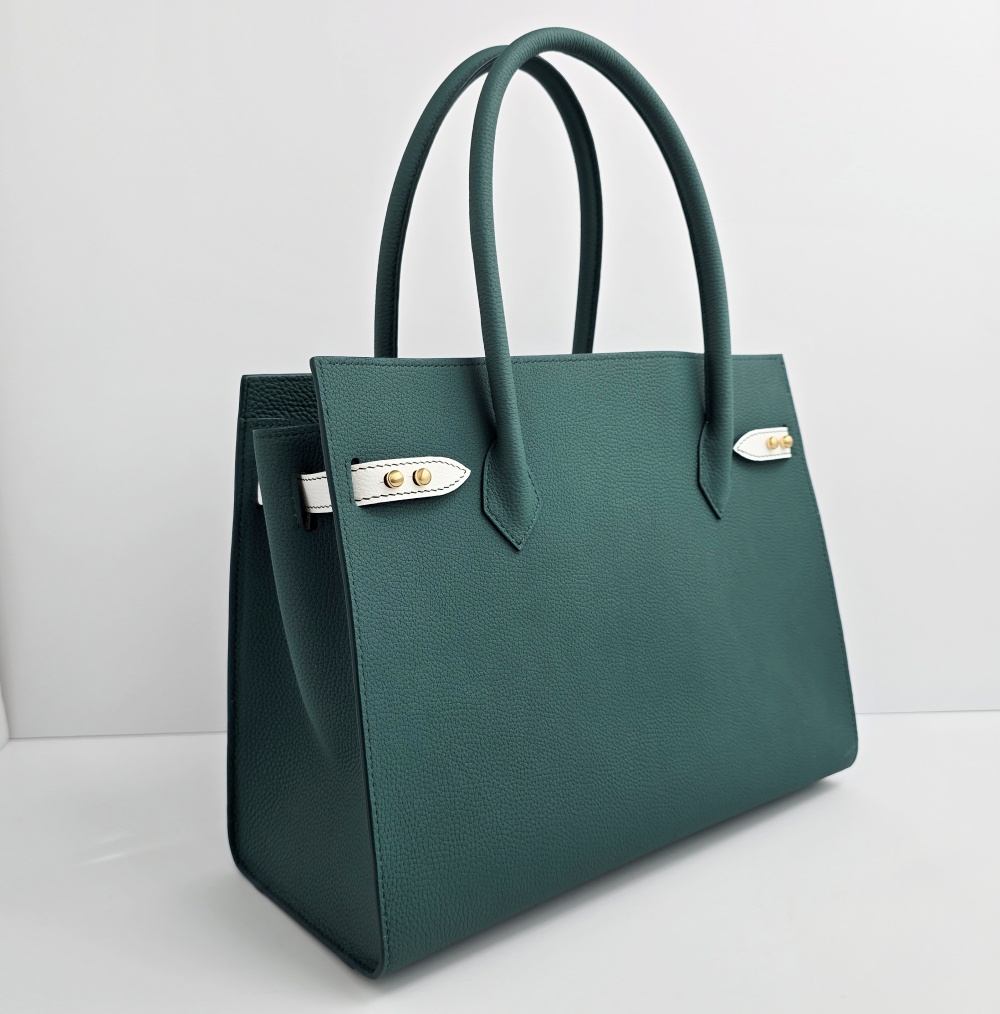
The beautiful silhouette of a luxury bag is never forged by a glamorous exterior hide alone. It is a visual miracle made possible only because the unseen internal architecture quietly sustains and defends it from within. Only the honesty of filling an invisible blueprint with the most flawless mechanics overcomes the passing of decades, completing the heritage of a true luxury masterpiece that can be proudly passed down through generations.
7. The Uncompromising YEGAK Discipline
- [Previous Step] Pattern Engineering: Why Proportion Defines Luxury: The Science of Golden Ratios in Bag Pattern Engineering
- [Next Up] The Science of Linen Thread: Why Premium Hand Stitching Begins with the Thread
Leave a Reply