The zipper length for a leather bag cannot be determined by the width of the bag alone. Even for bags of the same size, the appropriate zipper length varies depending on where the zipper is installed, how the opening moves, how the zipper ends are finished, and how wide the bag needs to open during use.
If the zipper is too short, the bag will not open widely enough, making it difficult to insert and remove items. If it is too long, excess zipper may remain inside the bag, or the zipper may ripple along curved sections and interfere with the smooth movement of the slider.
Within the complete leather bag-making process—a zipper is not a closure added at the end. It is a structural component whose position, length, end finishing, and assembly sequence with the lining must be determined from the pattern-design stage.
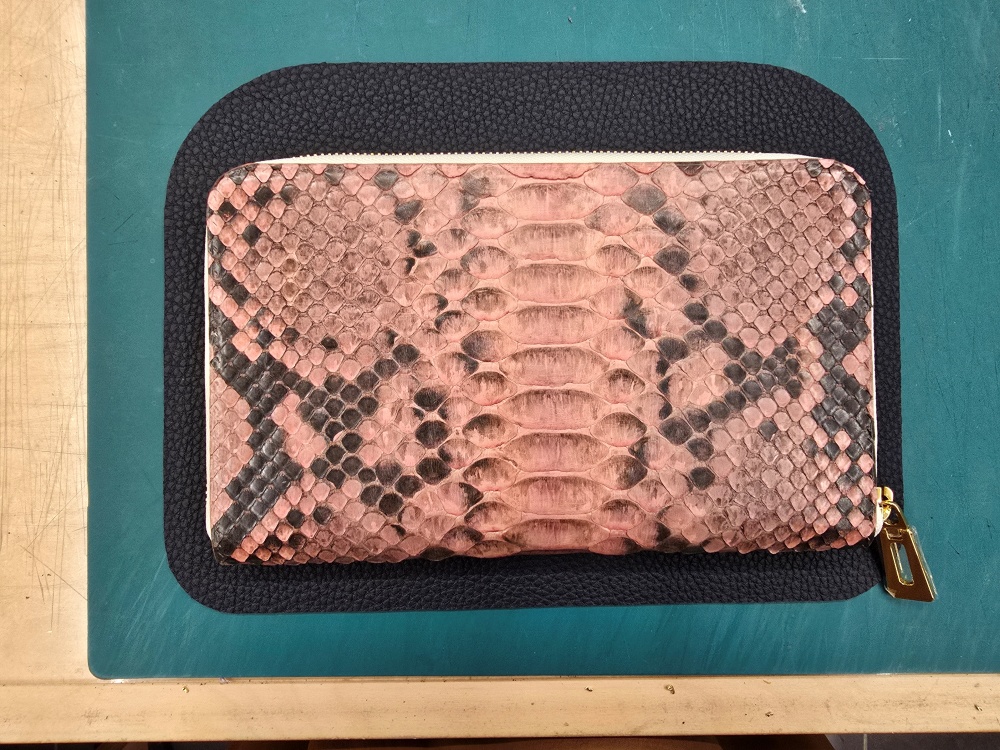
Overall Zipper Length and Usable Opening Length Are Different
When determining zipper length, distinguish between the overall length of the zipper tape, the length of the zipper chain, and the usable opening length through which the slider can actually move.
Even when the zipper tape is longer than the bag opening, the usable opening becomes shorter if both ends are folded or secured to interior components. The positions of the zipper stops, the full travel range of the slider, and the length of the leather pieces covering the zipper ends also affect the actual opening range.
When ordering or cutting a zipper, do not rely only on its stated length. First determine exactly where the finished zipper should begin and end its opening movement.
The Finished Opening Width Cannot Simply Be Used as the Zipper Length
Just as leather bag pattern measurements differ from finished dimensions—zipper length cannot simply be copied from the finished width of the bag opening.
The required length depends on whether the zipper stops precisely at both ends of the opening or extends beyond one or both ends so that the bag can open more widely. You must also check whether the zipper lies along a straight section of the body panel or continues around the curve of the gusset.
A bag with a 30 cm opening does not necessarily require a 30 cm zipper. The length of the leather pieces covering the zipper ends, the stitch-line position, seam allowances, the connection with the gusset, and the space occupied by the slider must all be considered.
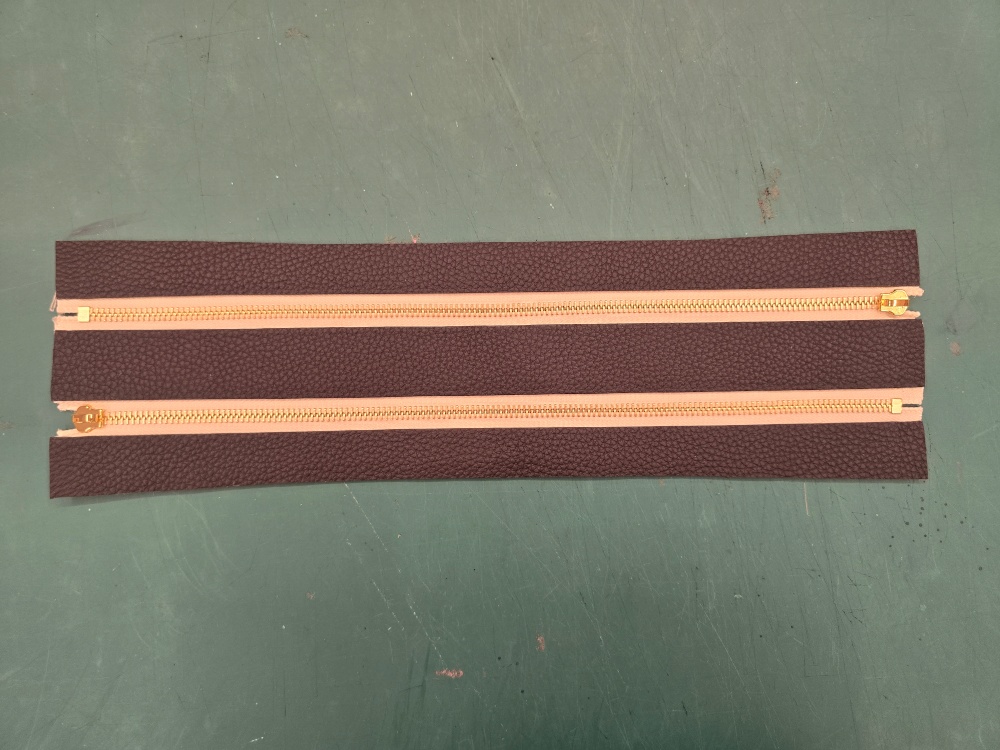
Determine the Required Opening Range First
Before determining the zipper length, consider what items will be placed inside and removed from the bag. Even when the exterior dimensions are sufficient, the interior space cannot be used effectively if the zipper opening is too narrow.
Check the following first:
- The size of the largest item that will be placed inside the bag
- Whether the item will be inserted vertically or at an angle
- Whether the bag opening needs to be operated with one hand
- Whether an interior divider or pocket restricts the opening range
- Whether there is enough space for the hand when the slider is fully open
- Whether the zipper ends catch on anything inside the bag
For a bag designed to hold wide items such as a laptop or documents, both the opening width and the extent to which the sides spread apart are important. For a small wallet or interior pocket, check whether there is enough room for the fingers to enter and grip the slider.
Zipper Starting and Ending Points Determine the Bag’s Usability
The zipper’s starting and ending points affect both the appearance of the bag and its practical usability.
If the zipper begins inside the ends of the opening, closed sections remain on both sides and reduce the usable opening range. Extending the zipper toward the gusset allows the bag to open more widely, but the excess zipper ends must be secured when they are not in use.
The resting position of the slider when the zipper is closed must also be checked. If the slider strikes a handle attachment or metal fitting, operating the zipper becomes inconvenient and repeated friction may damage the leather surface.
For a bag in which left-to-right symmetry is important, the resting position of the closed slider should be determined during the design stage together with the zipper’s starting and ending points.
A Zipper Installed Along a Curve Must Do More Than Match the Length
A zipper installed along a straight line and one installed around a curve operate under different conditions.
Zipper tape is flexible to a certain extent, but forcing it around a tight curve causes excess tape to gather on the inside while the outside is stretched. If stitched in this condition, wrinkles may form around the zipper or the zipper chain may twist and restrict the slider’s movement.
Check the following when installing a zipper along a curve:
- Does the zipper tape lie naturally along the curve?
- Is the excess tape on the inside free from folds and overlaps?
- Is the outer section of the tape free from excessive tension?
- Does the slider pass smoothly through the curved section?
- Do the left and right curves begin at matching positions?
- Does the leather opening remain flat instead of rolling inward after stitching?
Because the curve radius, leather thickness, and flexibility of the zipper tape vary, a single fixed formula cannot determine the correct length in every case. The most accurate method is to make a small test piece using the actual leather and zipper and then check how the zipper operates.
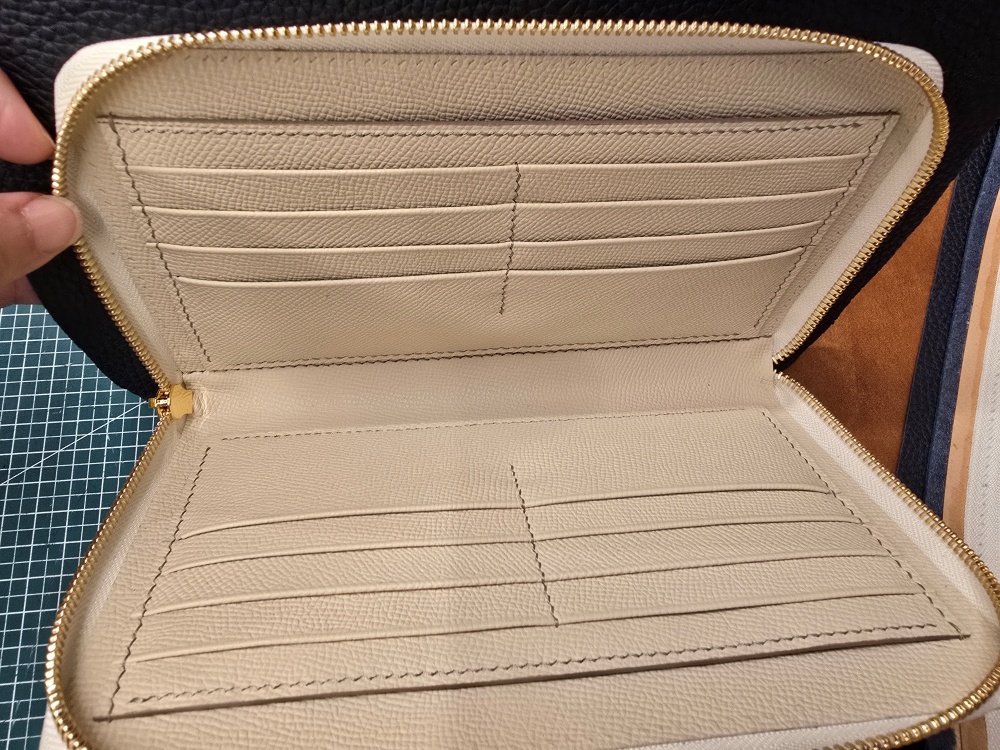
Zipper Ends Must Be Structurally Finished, Not Simply Left Loose
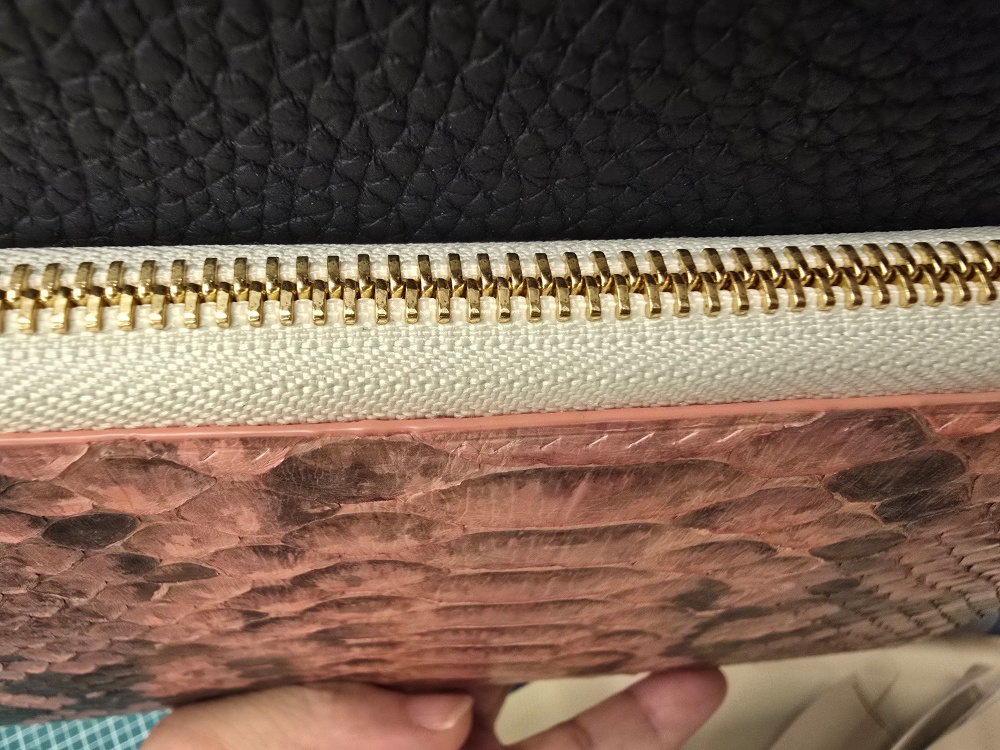
If the zipper ends are simply pushed inside the bag, they may change direction during use or catch on the lining and stored items. Repeated movement can also cause the tape ends to unravel or allow the slider to come off.
The ends should be wrapped with leather, secured inside separate zipper-end pieces, or stitched so that they cannot move within the bag structure. Whichever method is used, it must not interfere with the movement of the zipper chain or slider.
If the leather covering the zipper ends is excessively thick, both ends of the opening may bulge. If it is too thin or short, repeated opening and closing may stretch the stitching holes or cause the end piece to come loose.
The size of each zipper-end piece should be determined by considering the zipper-tape width, leather thickness, stitch-line position, and surrounding reinforcement together.
Skiving and Reinforcement Around the Zipper Must Be Calculated Together
At the zipper installation area, the exterior leather, zipper tape, lining, and reinforcement may overlap in several layers. If this combined thickness is ignored during assembly, the opening may become excessively stiff or the zipper tape may be pushed inward.
If the leather is skived too thinly, the area around the stitch line becomes weak and the holes may stretch during repeated use. If it is not skived sufficiently, excessive thickness around the zipper may cause the slider to rub against the leather or prevent the opening from folding naturally.
The reinforcement must support the zipper stitch line without becoming so rigid that it restricts curves and folds. If the reinforcement ends too abruptly, stress may concentrate along its boundary and create a visible line or crease on the leather surface.
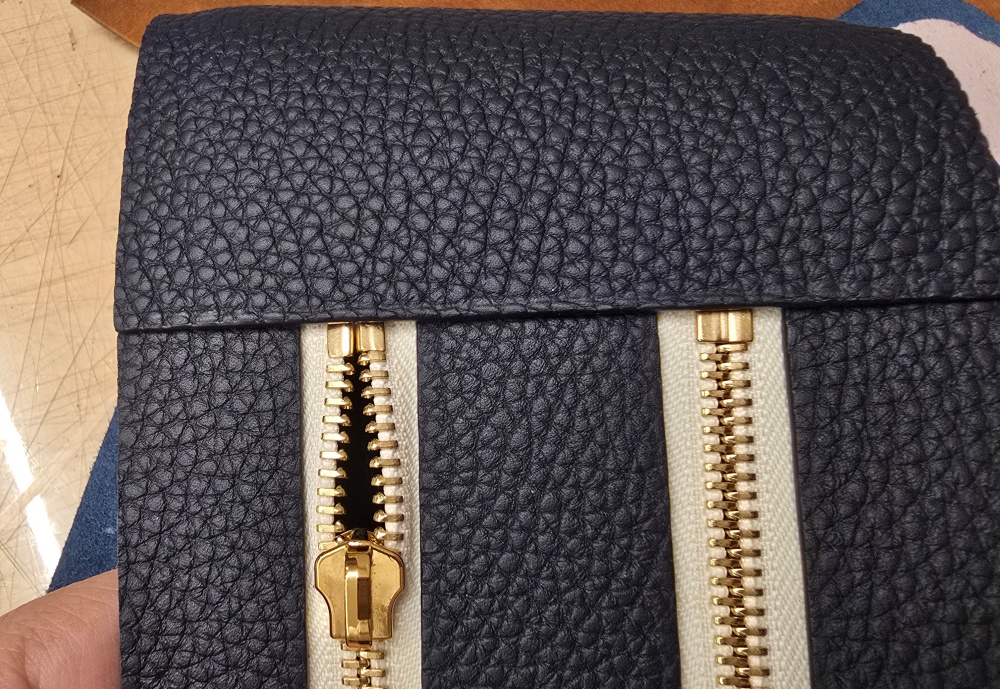
For an Interior Zipper Pocket, Check the Space Needed for the Hand
The full zipper-opening length of an interior pocket is not always completely usable. The slider and end pieces occupy space at both ends, while the depth of the pocket bag and the position of its opening also affect hand movement.
Why leather bag lining design matters—the position and size of a zippered pocket can affect not only the interior storage space but also the exterior form of the bag.
If the pocket zipper is positioned too high, it may overlap with the main zipper or handle reinforcement near the top of the bag. If it is too low, stored items become difficult to remove and the pocket bag may touch the bottom of the bag.
When the pocket is intended for specific items such as cards, coins, or a mobile phone, check the size of those items, the direction in which the hand enters, and the actual depth of the pocket bag before deciding the zipper length.
Control Stitching Tension to Prevent the Zipper from Rippling
Zipper tape is thinner and more flexible than leather, so it can easily stretch during stitching. Pulling the thread too tightly or stretching the tape in one direction while stitching can cause ripples around the zipper.
Secure the zipper and leather in stable positions before stitching and maintain a consistent distance from the edge to the stitch line. During stitching, open and close the zipper periodically to confirm that the slider continues to move smoothly.
If the zipper is tested only after stitching is complete, it may be difficult to identify the section causing the problem. The zipper’s movement should be checked repeatedly during stitching, especially around curves and end sections where several materials overlap.
Test Zipper Operation Before Closing the Bag
Do not proceed immediately to the next assembly stage simply because the zipper has been installed. Once the body panel and gusset have been joined and the bag has been closed, access to the inside of the zipper may become difficult.
Check the following:Check the following:
- Does the zipper open and close smoothly from beginning to end?
- Does the slider move without catching on the leather or lining?
- Are both sides of the opening the same height when the zipper is closed?
- Is the zipper tape free from twisting or rippling toward one side?
- Do the zipper-end pieces remain securely in place?
- Does the open zipper provide the required usable opening?
- Do the interior divider and pockets remain clear of the slider’s path?
- Does the stitch line remain stable after repeated opening and closing?
The zipper should be tested both with the bag empty and with the items it is intended to carry. Check whether the zipper is placed under excessive tension when the weight of the contents pulls the bag opening apart.
Zipper Length Is the Result of Calculating Both Use and Structure
The zipper length for a leather bag cannot be determined solely from the finished width of the bag or the number printed on the zipper product. The usable opening range, starting and ending points, curve shape, end finishing, thicknesses of the leather and lining, and assembly sequence must all be calculated together.
If the zipper is too short, the interior space cannot be used effectively. If it is too long, the end finishing and operational stability may be compromised. The zipper’s function should therefore be defined during the pattern stage and tested using the actual materials.
Accurate zipper design is not simply about making a bag close properly. It is functional design that allows every action—from opening the bag and placing items inside to closing it again—to flow naturally.
Leave a Reply