Tag: French Skiving

  • French Skiving vs Standard Skiving: What's the Real Difference?

    The Tale of Two Edges: Demystifying Leather Skiving Techniques
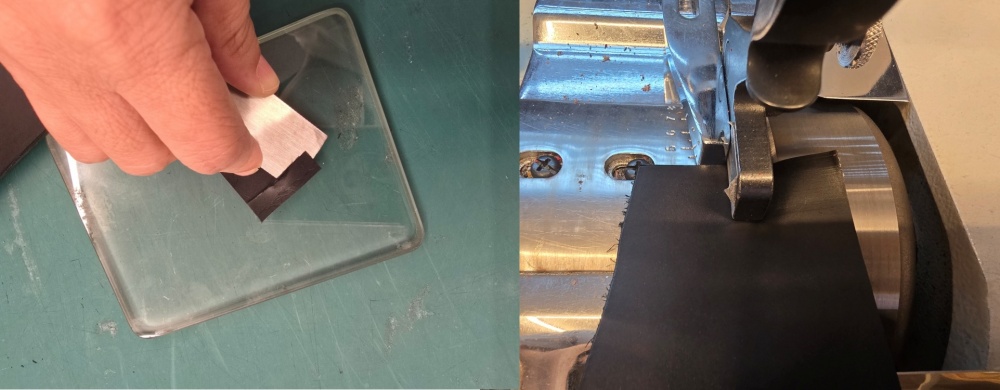
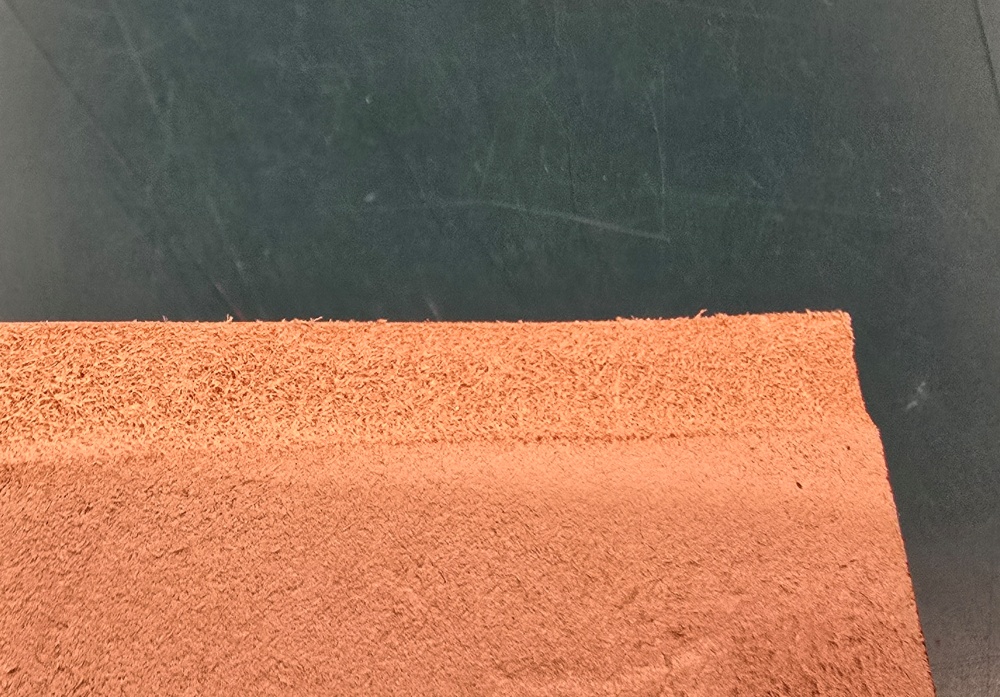
    사선 피할(단면 피할)과 평평한 바닥의 프렌치 피할 기법의 시각적 비교

    Walk into any high-end leather atelier, and you will find a tool that artisans constantly maintain: the skiving knife. Yet, many intermediate crafters often find themselves confused by technical terminology. Specifically, what is the actual mechanical difference between Standard Skiving and French Skiving?

    Choosing the wrong technique at a critical seam is the exact reason a bag fails to lay flush like a Hermès piece, turning instead into a bulky, amateurish lump. Let's deconstruct the mechanics of these two essential disciplines.


    1. Standard Skiving (Bevel Skiving): The Linear Incline

    Standard skiving—often called edge beveling—is the process of shaving the leather perimeter at a consistent, diagonal angle (usually between 15° to 30°).

    • The Geometry: It creates a smooth, continuous slope from the full thickness of the leather down to a feather-thin edge (e.g., sloping from 1.4mm down to 0.1mm)
    • When to Use It: This is your go-to technique for basic raw-edge construction. When you are stitching two panels together and painting the edge with edge coat (giardini/fenice), standard skiving eliminates the double-bulk, keeping the final edge sleek and uniform.
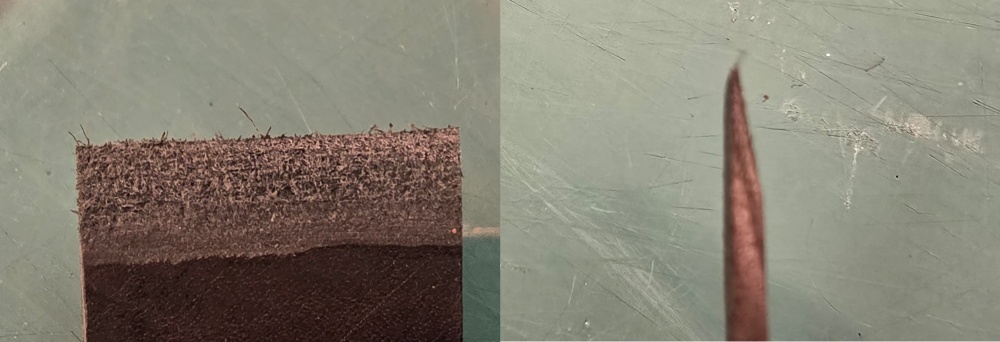
       
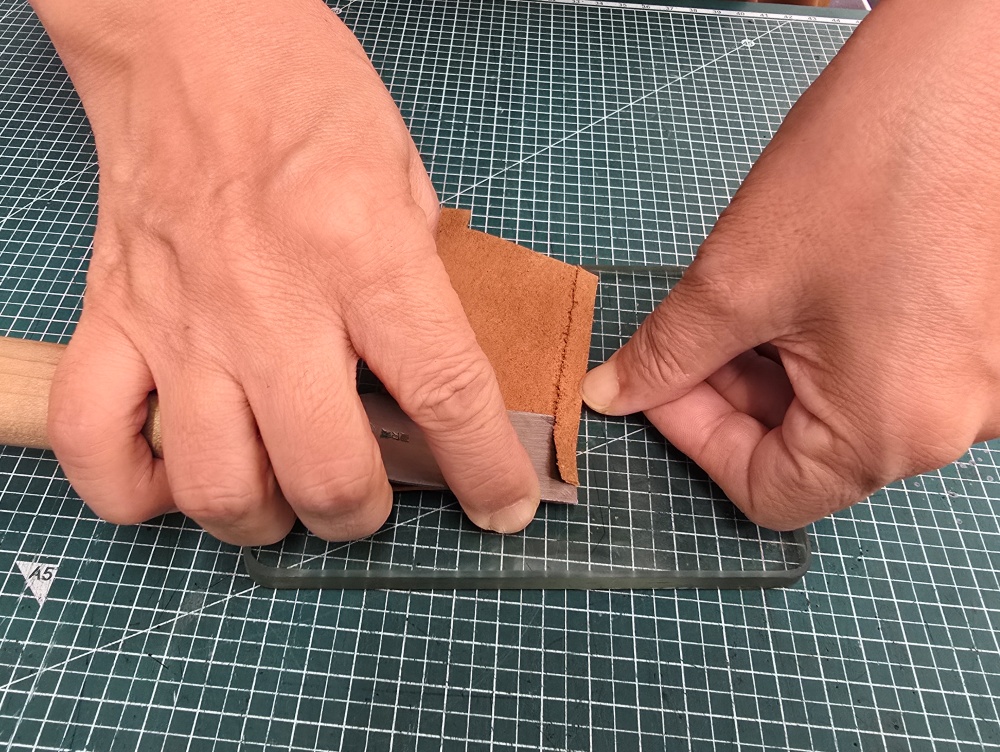
    고급 가죽 외곽선을 따라 정밀한 직선 베벨 경사로 구현된 피할 단면 클로즈업

    2. French Skiving (Channel Skiving): The Architectural Step-Down

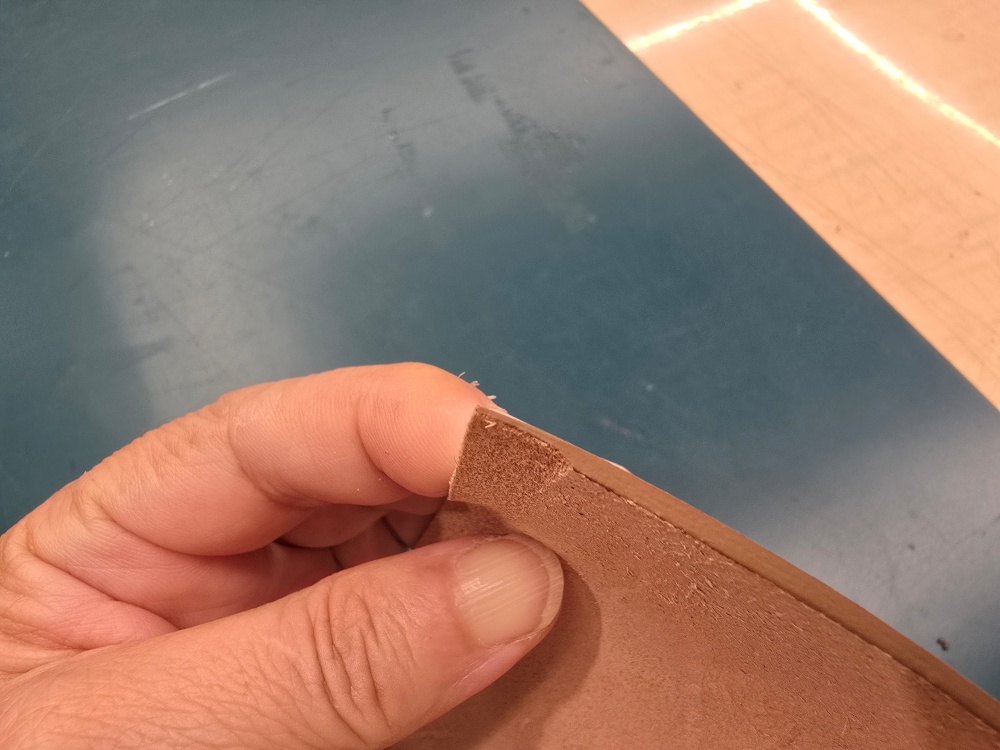
    French skiving is a highly specialized, advanced technique where you carve a flat-bottomed rectangular channel into the leather's flesh side, rather than a diagonal slope

    • The Geometry: It creates a sharp, right-angled step-down (⎔). The center of the channel is perfectly flat and uniform in thickness.
    • When to Use It:** This is absolutely mandatory for **turn-top folded edges (시접)**, pocket T-slots, and premium wallet card slots. By carving a 0.6mm flat channel into a 1.4mm panel, the leather folds over with crisp, geometric perfection. It prevents the folded seam from bloating or creating an awkward exterior bump.
    프렌치 에져로 정밀하게 바닥을 파내어 완성한 가죽 표면의 계단식 건축학적 라인

    📊 Quick Reference: Technical Comparison

    Technical AttributeStandard Skiving (Edge Bevel)French Skiving
    Cut ShapeDiagonal Slope ( /Flat-Bottomed Step ( ⎔ )
    Primary ToolJapanese Utility Knife / Round KnifeFrench Edger / Flat-nosed Chisel Knife
    Best Used ForRaw-edge joinery, edge paintingFolded edges (turn-top), T-slots, lining tabs
    Difficulty LevelMedium (Requires steady hand angle)High (Requires exact depth control)

    3. Beginner Pitfalls: The Cost of a Dull Blade

    Achieving a clean French skive on a soft, premium chrome leather (like French Crispe Goatskin) is notoriously difficult for beginners. Here are the two most common mistakes recorded in the YEGAK archive:

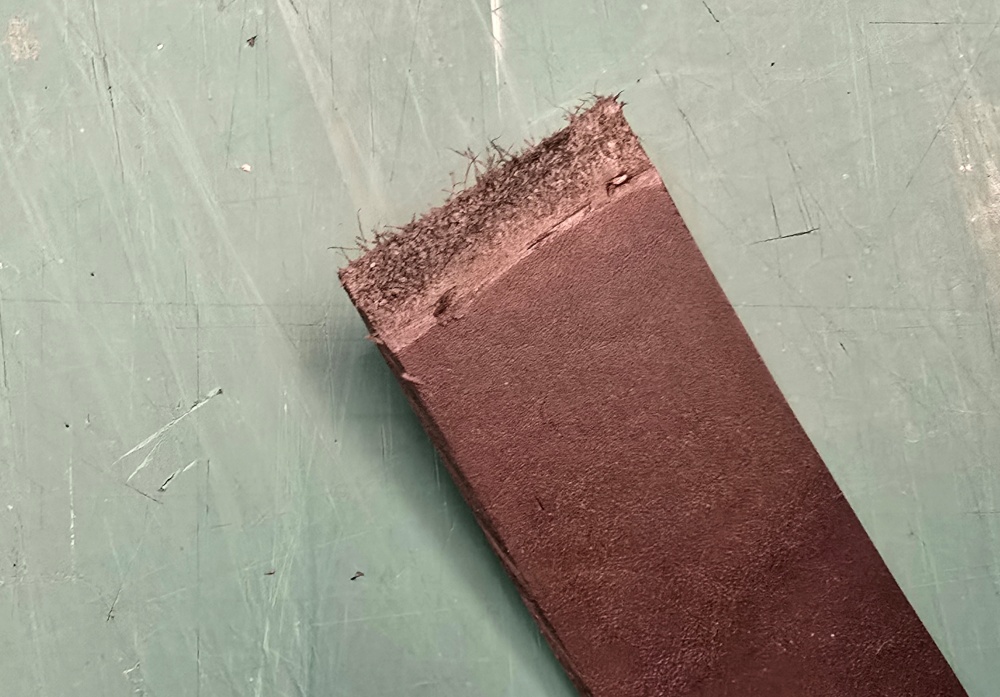
    • The Chattered Gouge: Because chrome leather stretches, a dull blade will "hop" and bite into the leather unevenly, leaving ugly corrugated gouges. When you apply water-based adhesive, these uneven depths telegraph directly onto the smooth exterior grain
    • The Perimeter Rip:During a standard bevel skive, if the artisan pulls the knife too aggressively at the very edge, the thin 0.1mm foil of leather will stretch and tear, ruining the entire panel alignment
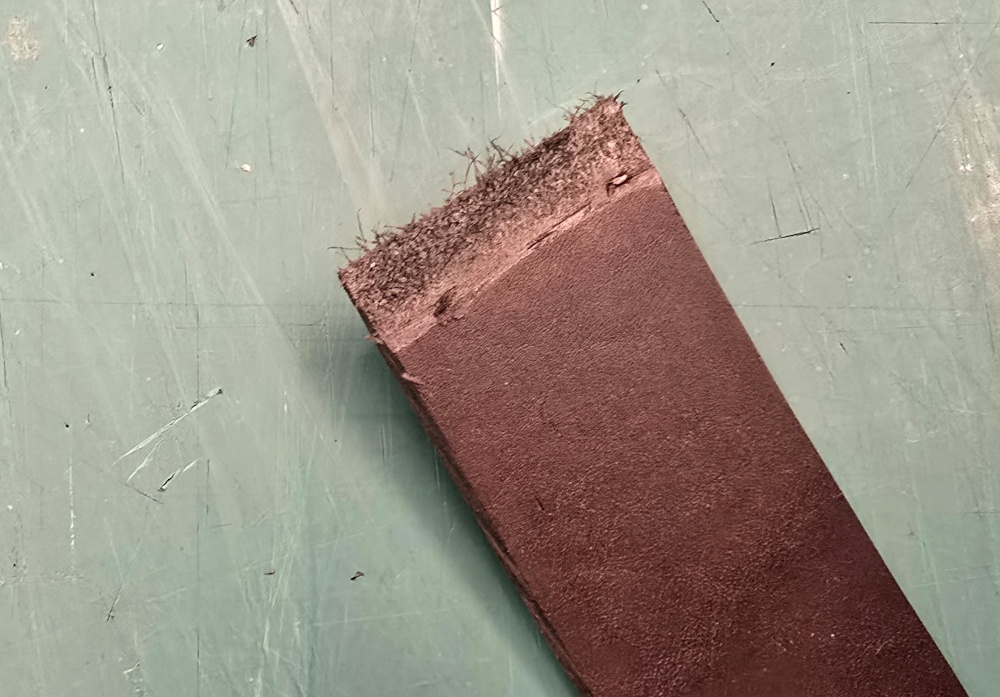
    무딘 칼날로 인해 표면이 불규칙하게 파이고 섬유 조직이 짓눌린 흔한 피할 실수 사례

    The Master's Secret: Mirror-Polished Maintenance

    The secret to taming soft chrome leather isn't brute force; it is microscopic sharpness. Before executing a French skive, a master artisan always strops the blade on leather loaded with chromium oxide compound until it achieves a mirror finish. The blade must effortlessly slice through the dense collagen fibers using only the weight of the hand.


    The YEGAK Knowledge Graph: Internal Link Building

    To master the complete physical architecture of high-end bag building, connect this practical guide with our foundational engineering theories:

  • The Science of Leather Skiving: Taming Fiber Density with Razor Precision

    Shaving the Invisible: Why Skiving is More Than Mere Thickness Control

    To the untrained eye, leather skiving is merely a mechanical task of shaving down the surface to make the hide thinner. However, to a high-end artisan, skiving is a highly sophisticated process of engineering calculations to precisely redistribute structural strength. It serves as the invisible foundational framework that determines whether a bag will maintain its razor-sharp architectural silhouette or slowly collapse from the seams.

    Raw, natural hides exhibit inconsistent structural densities across different quadrants. By utilizing a razor-sharp knife to control this fiber matrix at a microscopic level, the artisan gains absolute command over exactly where the leather must yield flexibly and where it must remain perfectly rigid.


    Key PointKey Point)
    Skiving is not an act of whittling away the essence of the leather; it is a deliberate recalculation of physical thickness to achieve seamless three-dimensional joinery and fluid structural transitions.


    1. Micro-Mechanics: Collagen Fiber Density and Blade Resistance

    Every square millimeter of full-grain leather possesses its own unique internal matrix. The upper grain layer (corium) houses a tightly interwoven network of collagen fibers, exerting immense tensile strength. Conversely, descending toward the lower flesh side, the fibers disperse in a loose and irregular matrix.

    As the skiving knife penetrates this organic web, the blade encounters constantly fluctuating resistance vectors. If the artisan's blade is not polished to a mirror finish, it will fail to shear the fibers cleanly, instead pushing or tearing the loose underlying tissue. Precision skiving initiates with a profound, tactile comprehension of this structural density through the fingertips. The artisan continuously calibrates the knife angle in real time to glide smoothly through the dense fiber walls without inducing structural stress within the leather.

    2. Architectural Technique: The Dichotomy of French Skiving and Standard Beveling

    In premium construction, a simple diagonal bevel is never sufficient. YEGAK classifies this margin control as a strict technical discipline.

    • Standard Edge Beveling: A technique that shears a linear slope at a single angle along the perimeter. It is primarily utilized to reduce the clumsy bulk of raw margins prior to basic stitched joinery.
    • French Skiving (Channel Skiving): A highly sophisticated, stepped skiving discipline. The artisan precisely excavates a flat-bottomed rectangular channel into the flesh side of the leather. This is the foundational technique that allows wallet card slots (T-slots) or concealed fold lines to bend with razor-sharp clarity, laying completely flush without protruding clumsily.

    3. Structural Standards: Precise Thickness Calibration for Individual Parts

    A master artisan executes distinct mechanical formulas dictated by the physical stress points concentrated on the bag. Below are the rigid technical benchmarks enforced within the YEGAK curriculum.

    • Folded Edges (Turn-Tops): Margins of a 1.4mm panel are micro-skived down to a 0.6mm gauge, securing an absolute flush interface when folded over.
    • Zipper Terminals: Shaved down sharply to 0.4mm to accommodate the thick canvas fabric of luxury zippers while blocking any clumsy accumulation of bulk.
    • Corner Gussets: Compound skiving is executed across multiple vectors down to 0.5mm to realize complex, three-dimensional curves, allowing the leather to wrap around radiuses seamlessly without creasing.
    • Handle Tabs: As core load-bearing components supporting the bag's full weight, these structures maintain a substantial thickness of 1.2mm to 1.5mm, utilizing minimal beveling to preserve the dense, natural fiber networks.

    Artisan’s Note
    A finely tuned blade exposes the integrity of the tannery. If the leather tissue delaminates or tears apart during a 0.5mm micro-skive, it serves as evidence that the hide lacks the collagen density required to anchor a high-end architecture over the long term.


    4. The Anatomy of Failure: The Structural Cost of Faulty Skiving

    Improper skiving stands as the primary culprit behind the premature structural collapse and diminished lifespan of a handmade leather object.

    • The Over-Skived Tear: Shaving a mere 0.1mm too deep cleanly severs the dense corium layer, leaving only weak flesh-side strands. Under physical tension, this boundary inevitably ruptures.
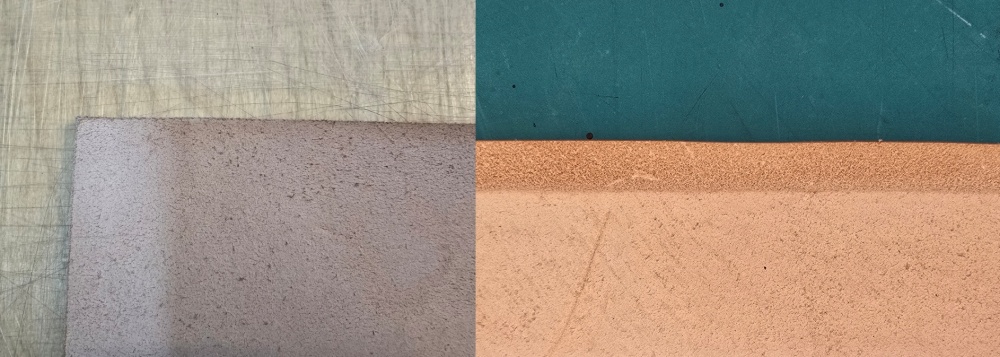
    • The Compressed Wrinkle: A dull blade pushes fibers forward instead of shearing them. This induces a subsurface accumulation of tissue, manifesting on the grain face as irreparable, erratic wrinkling post-assembly.
    • Delamination: An inconsistent, gouged skiving path prevents premium water-based adhesives from forming a continuous molecular bond, triggering catastrophic structural separation when exposed to shifting humidity levels.

    5. Calibrating the Blade: The Equation of Golden Equilibrium

    How does one tame fiber density with razor precision? The artisan continuously calculates three interconnected variables:

    1. Material Moisture Content: The structural elasticity of vegetable-tanned fibers responds sensitively to shifts in atmospheric humidity.
    2. Blade Geometry: The exact angle of the blade's bevel commands the initial resistance threshold encountered upon entering the dense collagen matrix.
    3. Anatomical Grain Direction: Mapping pattern orientation and cutting vectors according to whether the hide quadrant is a rigid shoulder, a dense butt, or a loose flank.

    The YEGAK Knowledge Graph: Internal Link Building

    To command absolute control over high-end architecture, precision skiving mechanics must be flawlessly synchronized with material science and traditional stitch work. Continue your technical evolution:

    • Foundational Asset #1: Review the core chemical architecture of your canvas in [The Ultimate Guide to Vegetable-Tanned Leather].
    • Foundational Asset #2: Master the physics of material thickness in [How Leather Thickness Determines Structural Integrity].
    • Next Technical Discipline: Decoding the Mechanical Tension of Joinery – [The Science of the Saddle Stitch: Secrets of Thread Trajectory and Silhouette Control] (Upcoming Release)
    • Advanced Engineering: Commanding the Geometry of Equilibrium – [Pattern Engineering: Architectural Stability and the Golden Ratio] (Upcoming Release)