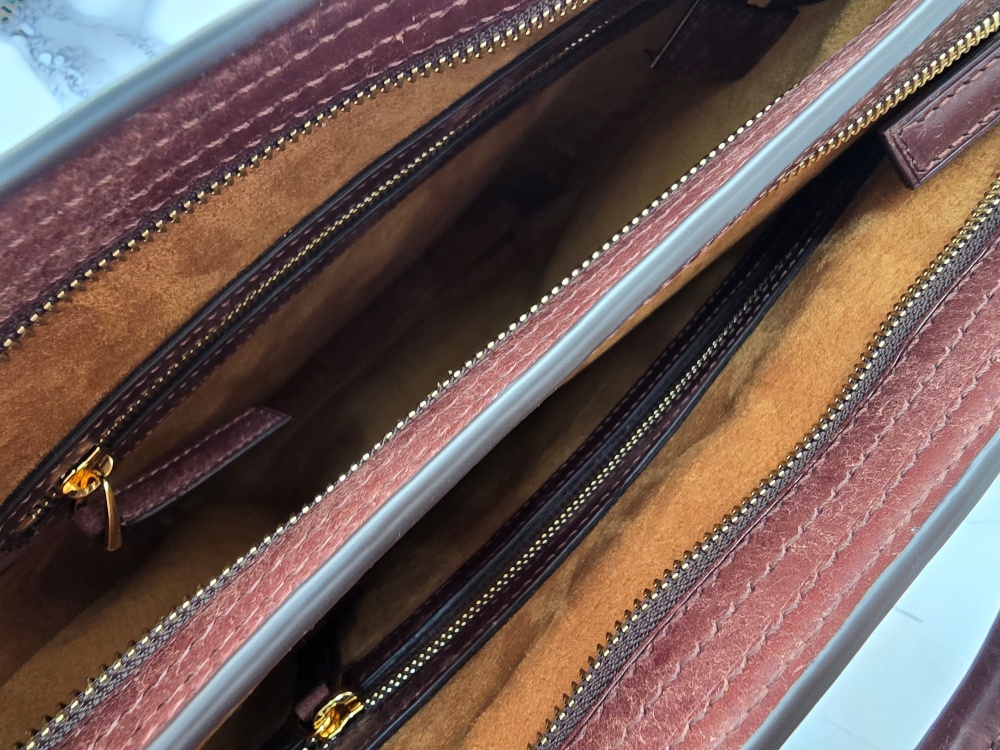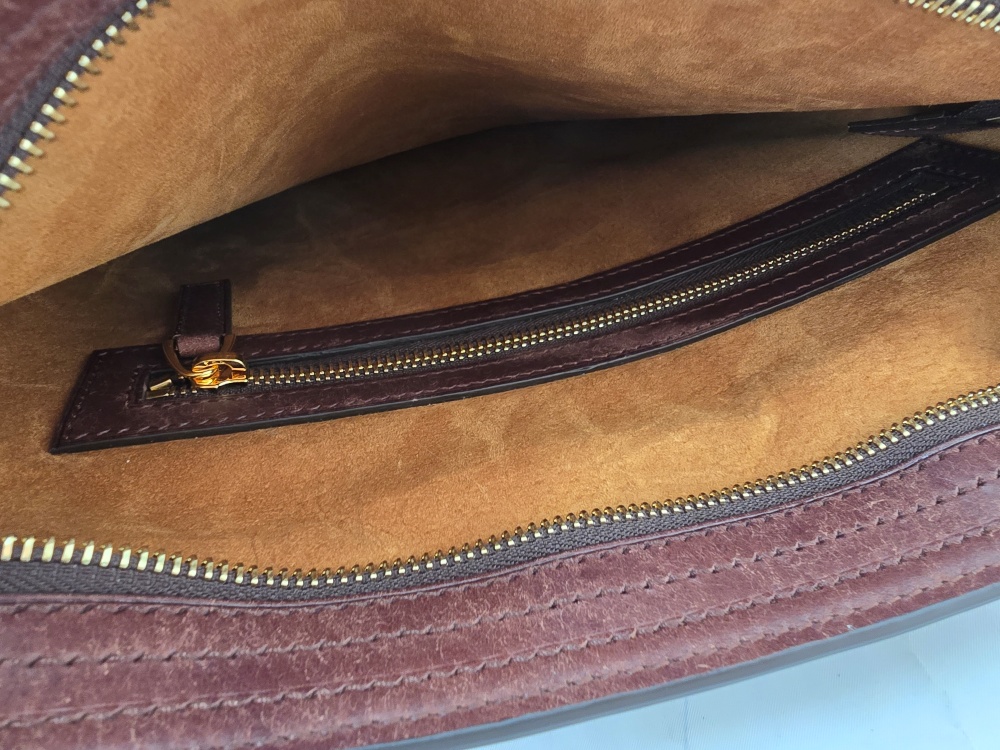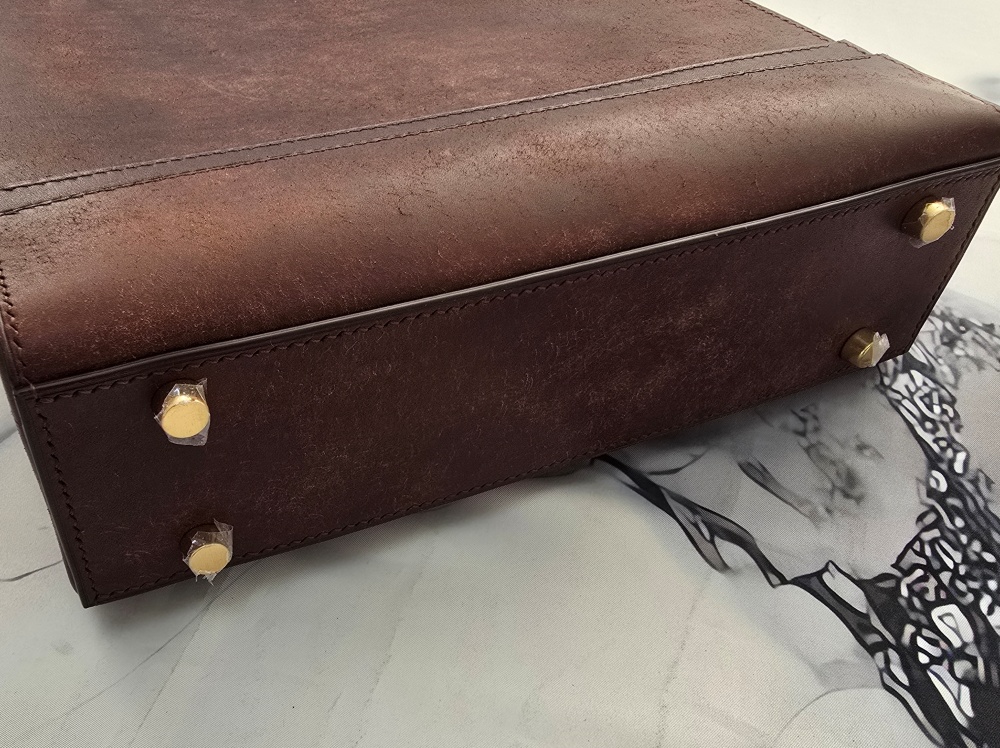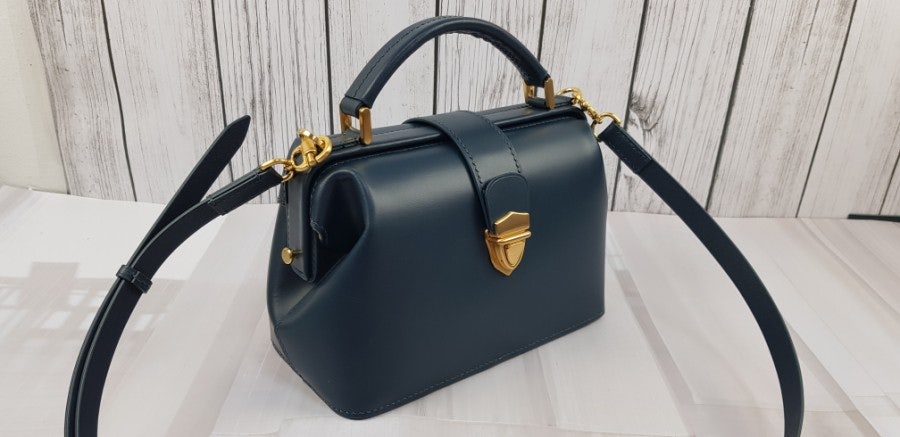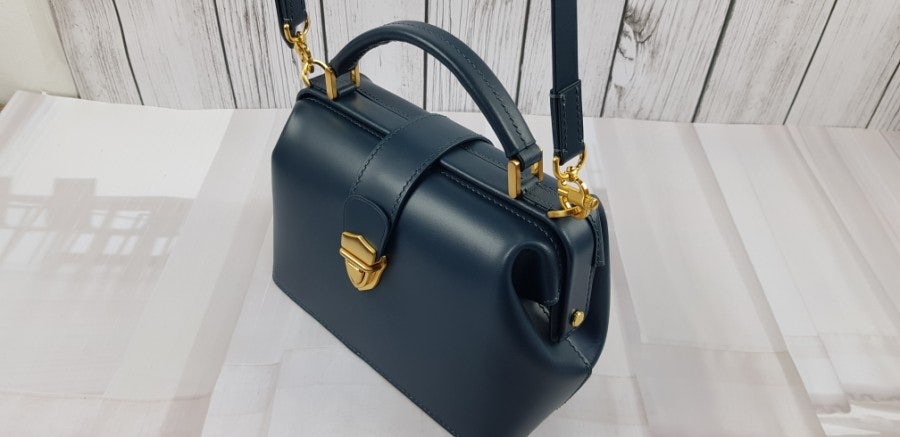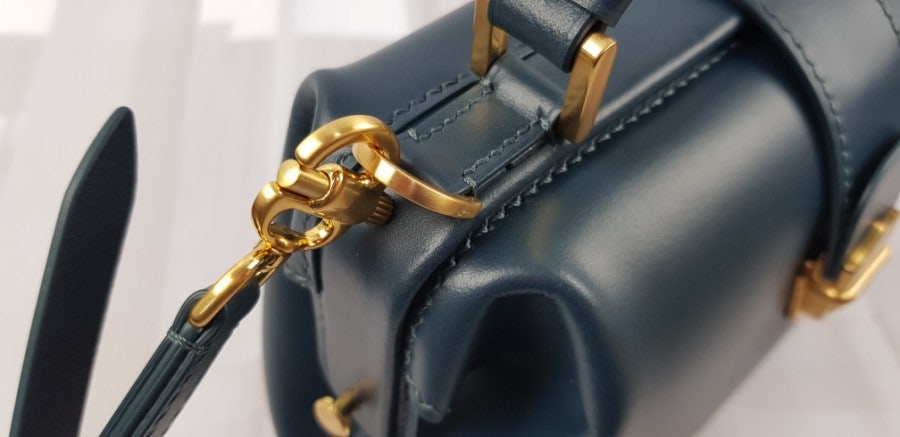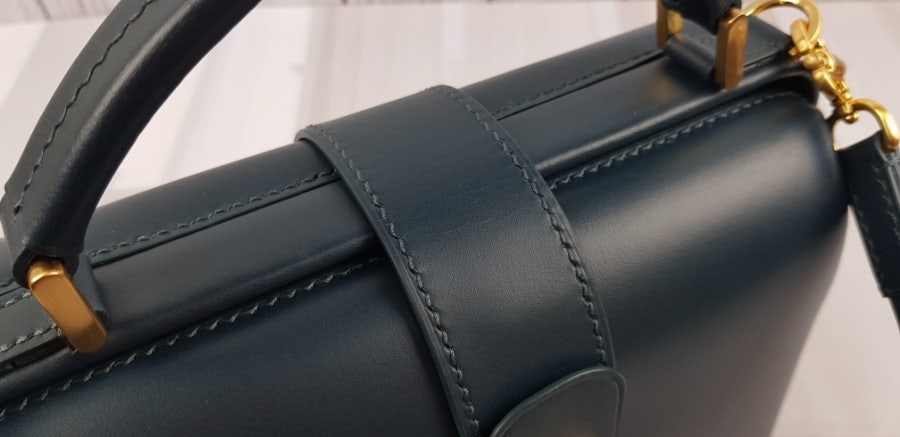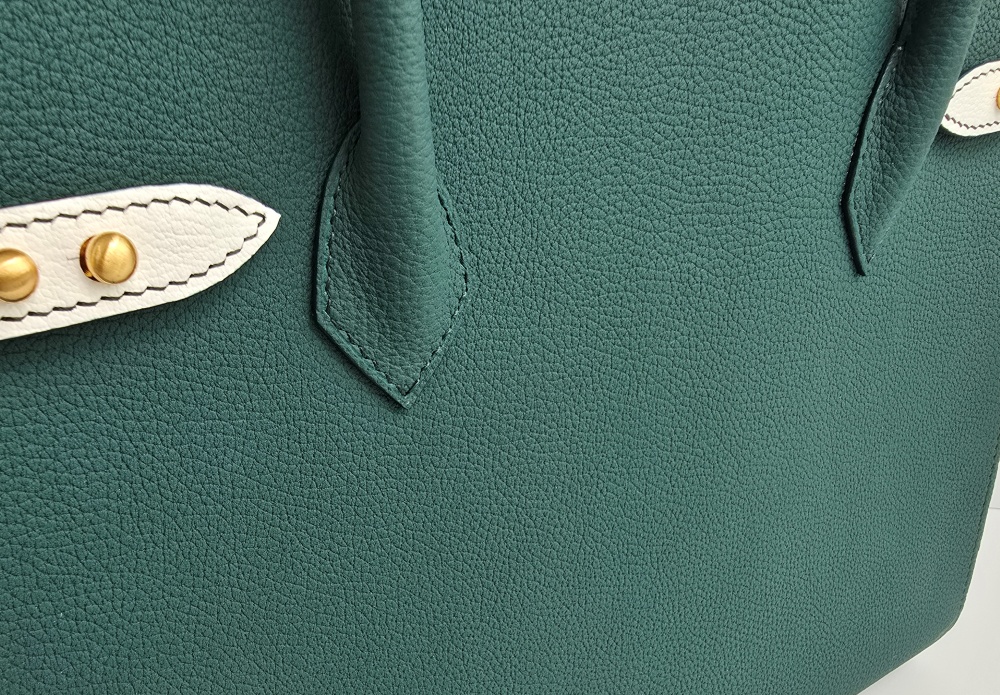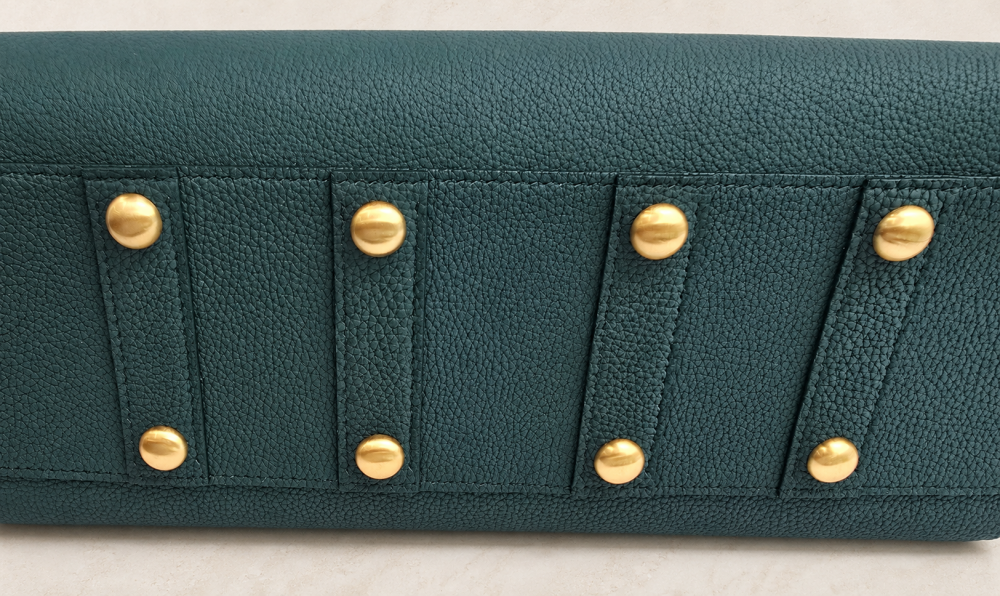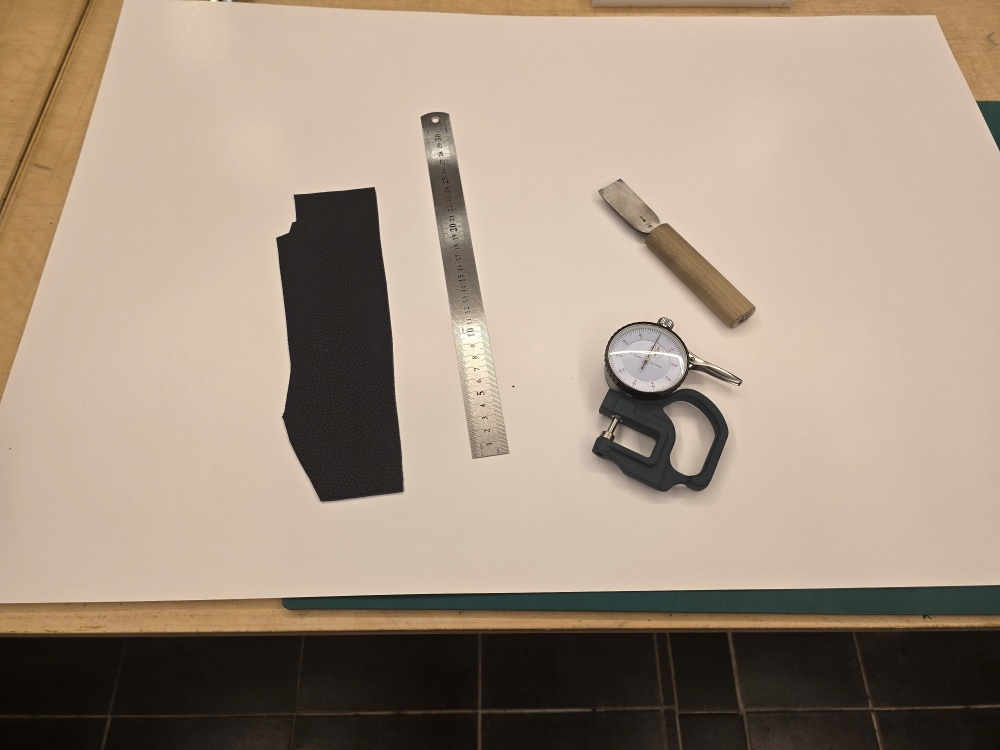
The finished dimensions of a bag cannot simply be copied directly onto a pattern. Even bags with the same width, height, and depth require different pattern measurements depending on the leather thickness, construction method, folding direction, and reinforcement structure.
Within the complete leather bag-making process—, the pattern serves as the link between design and actual assembly. A pattern should therefore be understood not as a drawing that simply copies the outline of a finished bag, but as a technical plan that calculates how flat materials will be transformed into a three-dimensional structure.
Key Principle
Leather bag pattern measurements are not copied from the finished dimensions. They are determined by the material thickness, folds, stitch lines, overlaps, reinforcement, and assembly sequence.
1. Finished Dimensions, Component Dimensions, and Pattern Measurements Must Be Distinguished
When designing a bag, three different types of measurements must first be distinguished.
- Finished dimensions: The actual external size of the bag after assembly
- Component dimensions: The structural area assigned to each part, such as the front panel, back panel, gusset, and bottom panel
- Pattern measurements: The final working measurements that include cutting lines, stitch lines, fold lines, and overlap allowances
For example, even if the finished bag is 30 cm wide, the front panel pattern cannot automatically be made 30 cm wide. The required measurements will increase or decrease depending on whether the bag uses turned construction, exposed-edge construction, or an overlapping gusset structure.
If the type of measurement being used is not clearly identified before drafting the pattern, the same number may be used with different meanings during the revision process.
2. Leather Thickness Changes the Center of a Fold
The thickness of paper has little influence when it is folded, but when leather is folded, the inner and outer surfaces travel different distances.
The leather on the inside of the fold is compressed, while the outside must extend around the curve. The thicker the leather, the greater this difference becomes. When multiple components and reinforcements overlap, the actual folding radius also increases.
The effect of leather thickness must therefore be checked carefully in the following areas.
- Curves where the gusset transitions into the bottom
- Areas where the bottom panel meets the front and back panels
- Folded finishing areas around the bag opening
- Folded sections used to wrap handles and straps
- Folded and overlapping areas around the zipper
A fixed formula that multiplies leather thickness by a single number cannot reliably calculate every fold allowance in actual production. The result is also affected by the firmness and elasticity of the leather, the degree of skiving, and the types of reinforcement and adhesive used.
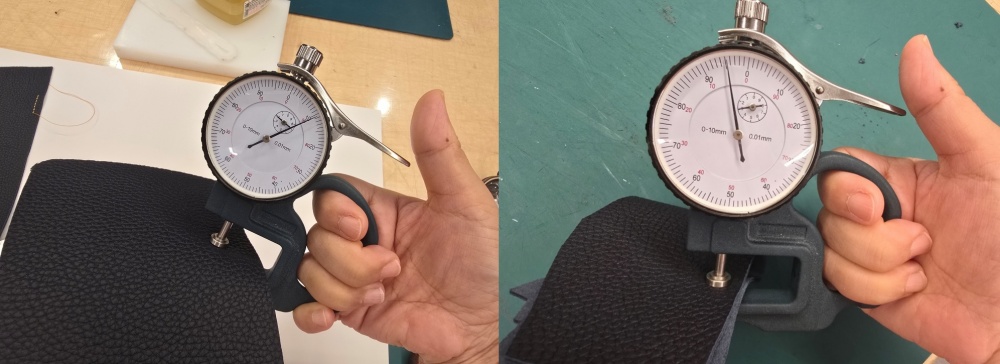
When an accurate measurement is required, the safest method is to assemble a small test piece using the actual leather and reinforcement materials intended for the bag.
3. Reference Lines Must Be Established Before Cutting Lines
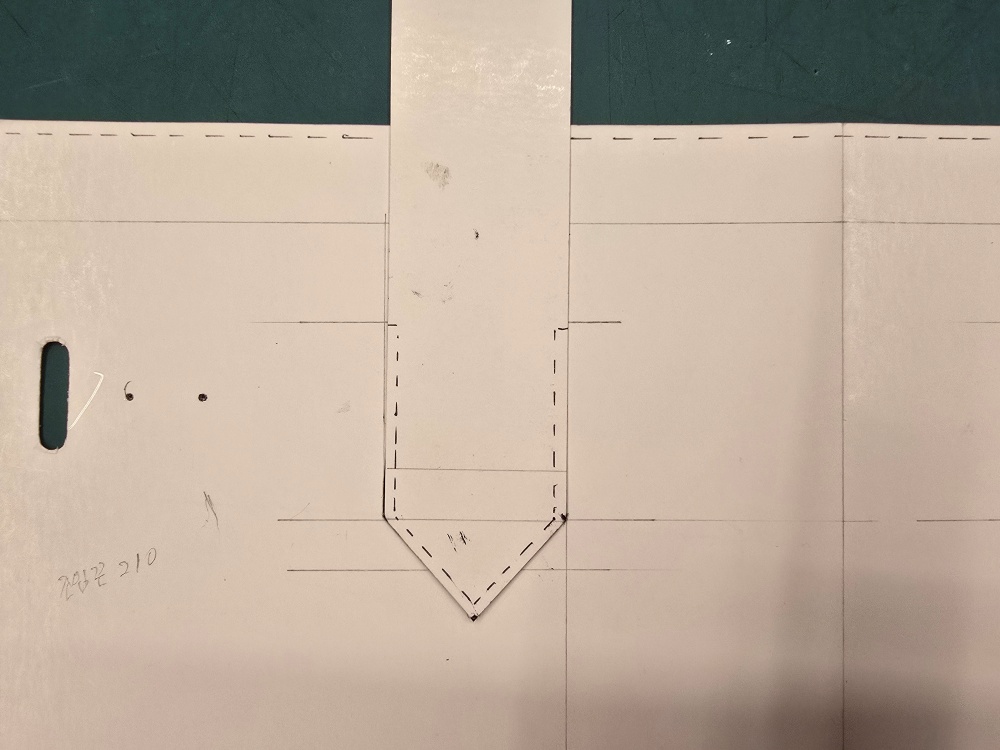
Many beginners start by drawing the cutting lines. However, accurate pattern measurements require reference lines that define the structure before the cutting lines are established.
Essential Reference Lines in a Pattern
- Stitch line:The position where the actual stitching will be made
- The fold lines: The position where the leather bends or folds inward
- Attachment line:The position where handles, pockets, reinforcements, and other components are placed
- Centerlines and alignment marks:Reference points used to align different components
- Cutting line:The final cutting position, including seam and overlap allowances
The stitch lines and fold lines must be established first so that cutting allowances can be calculated while preserving the intended finished dimensions. A pattern containing only cutting lines may be sufficient for cutting out the shapes, but it does not provide enough information for accurate and repeatable assembly.
4. The Construction Method Changes the Pattern Even When the Finished Dimensions Are the Same
Even when two finished bags have the same exterior shape, their patterns will differ if different construction methods are used.
A bag made with turned construction requires seam allowances beyond the stitch lines. In exposed-edge construction, the relationship between the finished outline and the cutting line is more direct, but precise edge finishing and component alignment become especially important.
When the front panel and gusset are assembled with an overlap, the width of that overlap must be included in the pattern. In structures that use piping or cord, the thickness of the additional material placed between the components must also be considered.
Pattern measurements are therefore not determined by the shape of the bag alone. The order and method used to join the components must be established first.
5. Skiving and Reinforcement Also Affect Pattern Measurements
Even when the same leather is used, the folding and assembly results will vary depending on where and how much the leather is skived.
Skiving a folding area reduces its thickness, creates a smaller folding radius, and allows the component to settle closer to its intended position. If the area is not skived sufficiently, the fold may be pushed outward, causing the opening or bottom of the bag to become wider than expected.
The same principle applies to reinforcements and linings. If the pattern is calculated using only the outer leather while ignoring the thickness of the reinforcement, lining, pockets, and zipper tape inside it, the finished interior space may be reduced or the exterior may expand.
A pattern must therefore be evaluated based on the combined thickness of all materials that overlap after assembly, rather than on the outer leather alone.
6. Assembly Allowance Is Not Extra Space for Loose Construction
Assembly allowance is not an arbitrary amount of extra space left to make components easier to fit. It is a calculated amount of space that allows the materials to fold, overlap, and align correctly during assembly.
If the allowance is too small, the following problems may occur.
- The gusset may become shorter than the front panel, preventing the endpoints from aligning.
- The bag opening may be pulled out of shape, causing the center of the bag to shift.
- Wrinkles or puckering may appear along curved areas.
- The zipper may curve or become difficult to open and close.
If the allowance is excessive, the components may shift and the stitch line may become unstable. Assembly allowance is therefore not about adding as much extra space as possible, but about providing the correct amount exactly where it is needed.
7. Test Assembly Is Required Before Finalizing the Pattern
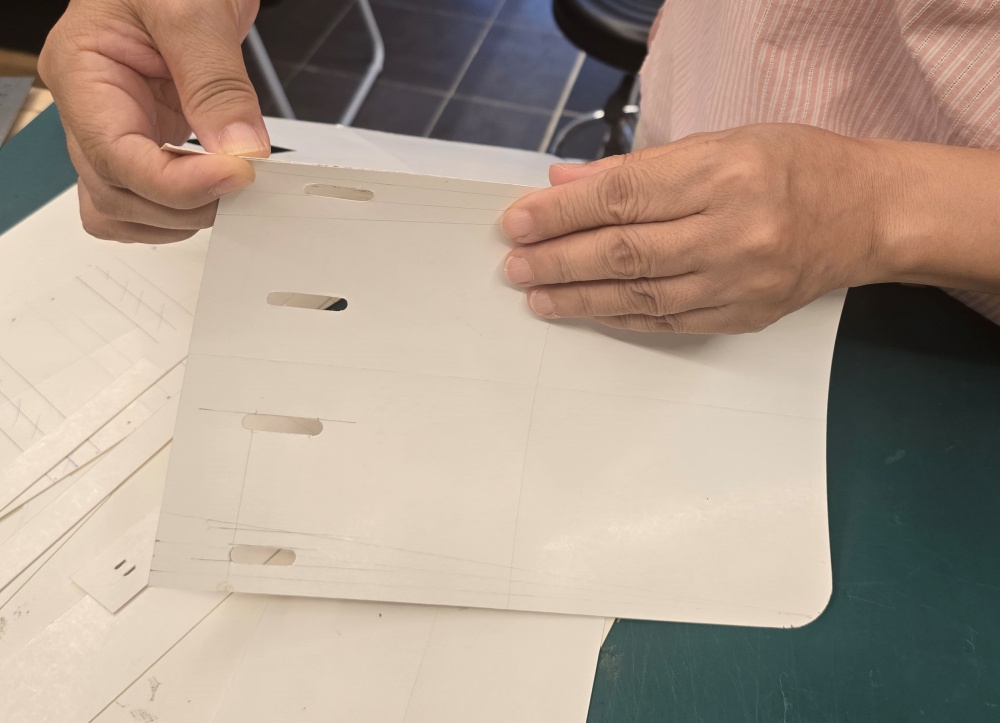
An accurate pattern is rarely completed in a single attempt. It is finalized through test assembly and revision.
An accurate pattern is rarely completed in a single attempt. It is finalized through test assembly and revision.
- Major curves where the front panel and gusset meet
- Bottom corners
- The bag opening and zipper length
- Handle attachment areas
- Connections between straps and metal fittings
- Areas where multiple reinforcement layers overlap
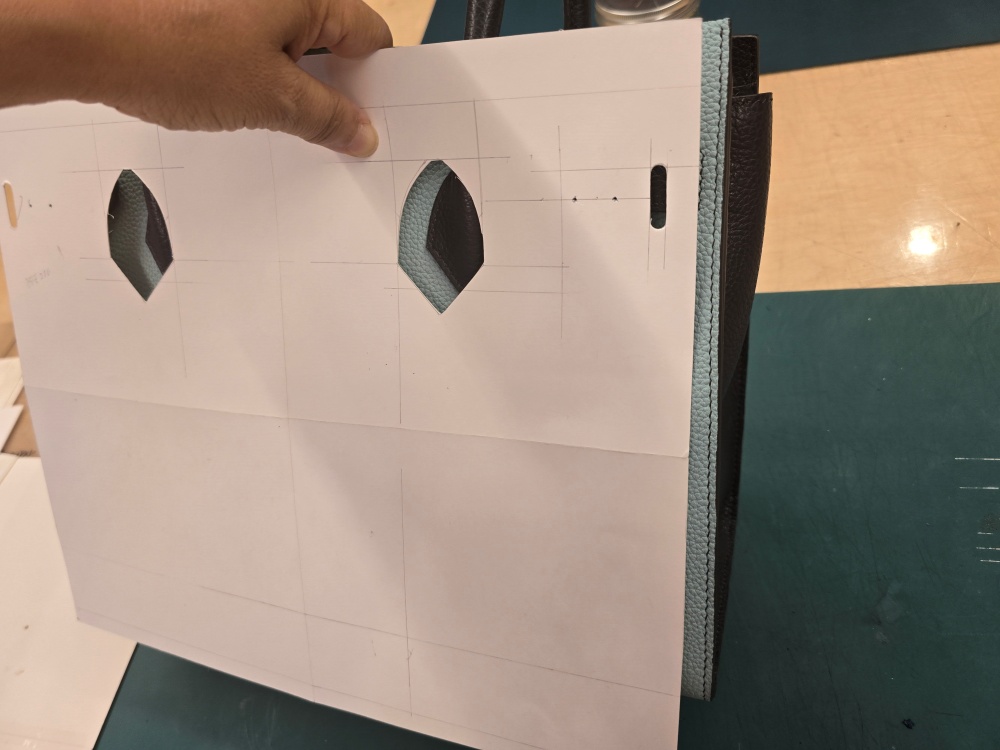
An efficient method is to check the overall form using paper or an inexpensive substitute material and then test only the critical folding areas with the actual leather.
8. A Commercial PDF Pattern Must Explain the Basis of Its Measurements
A PDF pattern is not complete simply because its shapes are accurately drawn. It must also provide the production conditions required for users to reproduce the same result.
Future PDF patterns provided by Slow Artisan should include the following information.
- The width, height, and depth of the finished item
- Print scale and a reference line for checking the printed size
- Recommended leather types and thickness range
- The number of pieces to cut for each component
- Clear identification of cutting lines, stitch lines, and fold lines
- Center points and alignment marks for matching components
- Skiving areas and recommended skived thickness
- The placement of reinforcement and lining materials
- The assembly sequence and important precautions
This information enables the purchaser not only to cut along the pattern lines, but also to reproduce the form intended by the designer with consistent results.
The quality of a PDF pattern should be judged by its reproducibility, not by the number of lines it contains.
Checklist Before Finalizing a Pattern
- Have the finished dimensions and pattern measurements been clearly distinguished?
- Have the actual thicknesses of the leather and reinforcement materials been measured?
- Were the stitch lines and fold lines established first?
- Have the correct seam and overlap allowances been applied for the chosen construction method?
- Has the change in thickness after skiving been checked?
- Have the major curves and folding areas been test-assembled?
- Do the center points and alignment marks of the left and right components match?
- Does the pattern provide enough information for another person to assemble the item correctly?
Conclusion
A good pattern is not simply a reduced or unfolded drawing of the finished bag’s outline. It is a production standard that organizes leather thickness and material properties, folding direction, construction method, and working sequence on a flat surface.
This process of judging the work according to the relationship between material and structure, rather than simply copying the final result, is also connected to Why Leathercraft Should Be Learned Through Principles, Not Just Techniques.
To design leather bag pattern measurements accurately, the actual materials must be measured, the results of test assemblies recorded, and those findings applied to the next production process rather than relying on a single formula. As these records accumulate, the pattern develops from a simple cutting template into a professional and repeatable design resource.