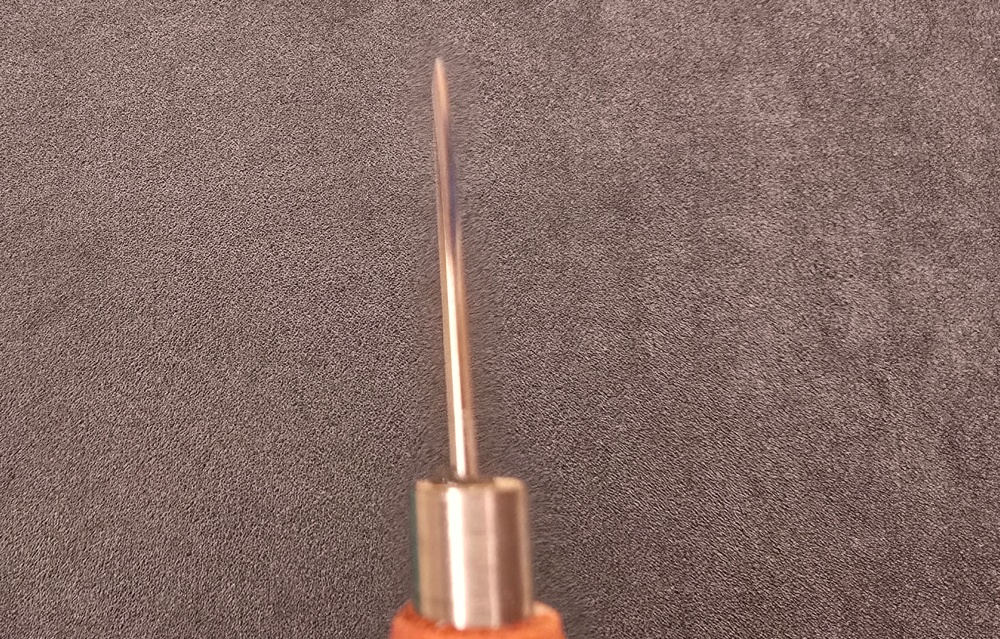
In leathercraft, thread is not simply a material for connecting pieces of leather. The thickness, twist, surface texture, and luster of the thread change the impression of the stitches and greatly influence how well the finished bag maintains its shape over time. Even if you use the same leather and the same pattern, the atmosphere of the piece changes significantly depending on the thread you choose.
Natural linen thread is a traditional material that has been used in leather handcrafting for a long time. Due to its unique natural texture and warm impression, it is still widely loved in high-end leather goods and manual work. However, when actually crafting bags and accessories, I use Vinymo MBT more often than natural linen thread.
This does not mean that one thread is absolutely superior. It is simply because the characteristics of Vinymo MBT better align with the production standards I value.
■ Natural Linen Thread and Vinymo MBT Serve Different Purposes
Natural linen thread is made from flax fibers. When waxed, the thread gains proper stiffness and friction, allowing it to sit stably within the leather's stitching holes. Because a subtle fibrous feel remains on the surface, the stitch line is not overly smooth. When this natural irregularity meets vegetable-tanned leather, it creates a depth characteristic of a truly handmade object.
On the other hand, Vinymo MBT is a bonded polyester thread. The twist does not unravel easily, and the thickness and surface condition of the thread are relatively uniform. Even when making long continuous stitches, it is easy to maintain a consistent impression from beginning to end.
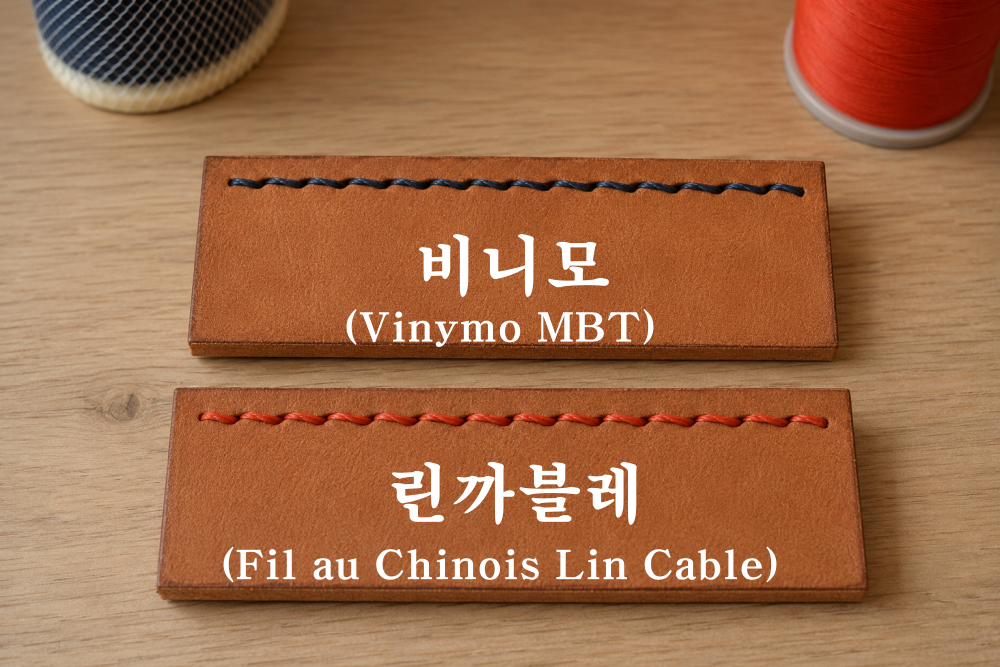
- Natural Linen Thread: Natural and traditional impression / Fibrous surface texture / Calm and soft luster / Waxing required
- Vinymo MBT: Neat and modern impression / Smooth and uniform surface / Subtle and clear luster / Stable twist and consistent thickness
■ The First Reason I Use Vinymo MBT More Often: Consistent Stitches Over Long Lines
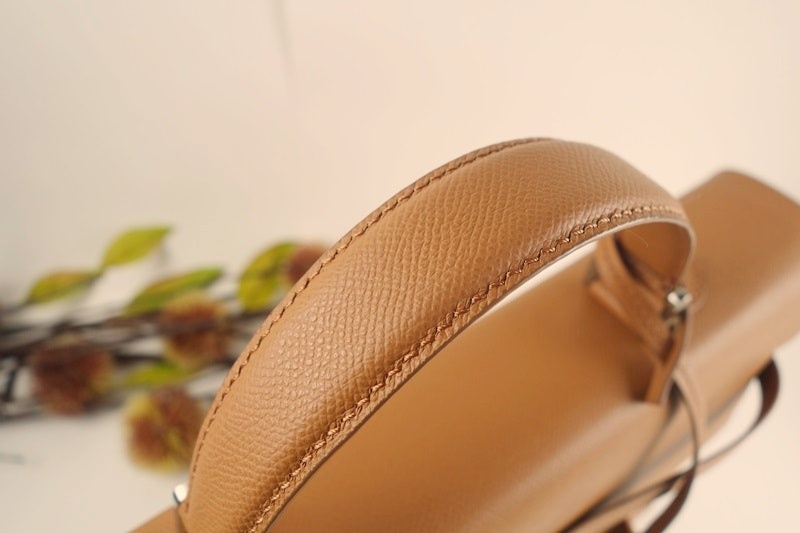
Bags have much longer stitching lines than small leather accessories. Parts of varying thicknesses—such as the main body and side panels, the bottom and reinforcements, and the handles and opening—are connected into a single structure. As the stitch line gets longer, the twist and tension of the thread can change slightly. A difference that might not be visible in a short section becomes noticeable as it follows the long outline of a bag.
Because Vinymo MBT is quite stable in its thickness and twist, it is great for continuing stitches with a consistent rhythm. It makes it easier to neatly arrange not only the slanted stitches on the front but also the stitch appearance on the back. What I want is not just neat sewing. It is for the stitching lines to connect solidly as part of the structure when viewing the bag as a whole.
■ The Second Reason: Easy to Reproduce Results in Repeated Production
If it is a one-off piece, you can adjust the pulling tension of the thread based on the feel of your hands that day. However, it's a different story if you are making multiple items from the same pattern or communicating work standards clearly to others through pattern documents. When applying the same thread thickness, hole size, stitch spacing, and pulling force again, similar results must be achieved.
Vinymo MBT is perfectly suited for such repeated production. By using a thread of the same specification, the stitch proportions confirmed in the initial work can be reproduced quite stably in the next project. A good pattern should not rely solely on the maker's coincidental hand skills. Even when someone else applies the same standards, the result should come close to the originally intended shape and balance.
■ The Third Reason: Great for Considering the Usage Environment
A bag is not an exhibit kept in a display case; it is an item carried by hand every day. The handles are constantly in contact with human hands, and the bottom and corners create friction against clothes or surrounding objects. It is also fully exposed to rain, moisture, sunlight, and temperature changes.
Polyester thread generally absorbs less moisture and maintains its color and physical properties stably. Vinymo MBT is also excellent for stitching bags or wallets used daily. Especially for parts that repeatedly bear weight—such as handle attachments, bag bottoms, and openings—you must consider not only the appearance but also the stability to withstand the test of time.
■ Does Vinymo MBT Also Need Wax?
The bonding treatment of Vinymo MBT does not mean the same thing as waxing. The bonding treatment keeps the thread twist from unraveling, while wax controls the friction and smoothness during sewing.
I believe that, depending on the working conditions, Vinymo MBT can also be lightly waxed. When passing through long stitch lines or when the friction on the leather edges is high, a little wax helps. However, applying too much wax can attract dust, leave marks on light-colored leather, or make the stitch surface look dull. It is better to apply it thinly and evenly, just as much as needed.
■ Then, When Should Natural Linen Thread Be Used?
It is not that I don't use natural linen thread at all. In the following types of work, the charm of natural linen thread actually shines much brighter.
- When emphasizing the process of leather aging and breaking in naturally over time
- When you want to show the unique texture of hand-stitching as a visual element
- When a heavy, traditional atmosphere is needed
- For projects where you want to highlight a human touch rather than perfect uniformity
The subtle fibrous feel of natural linen thread blends very naturally with the process of the leather's color deepening. The thread itself also changes slightly along with the leather, leaving traces of time on the finished product. Therefore, it is right to first consider what atmosphere and usage conditions you are aiming for before choosing a thread.
■ The First Thing I Check When Choosing a Thread
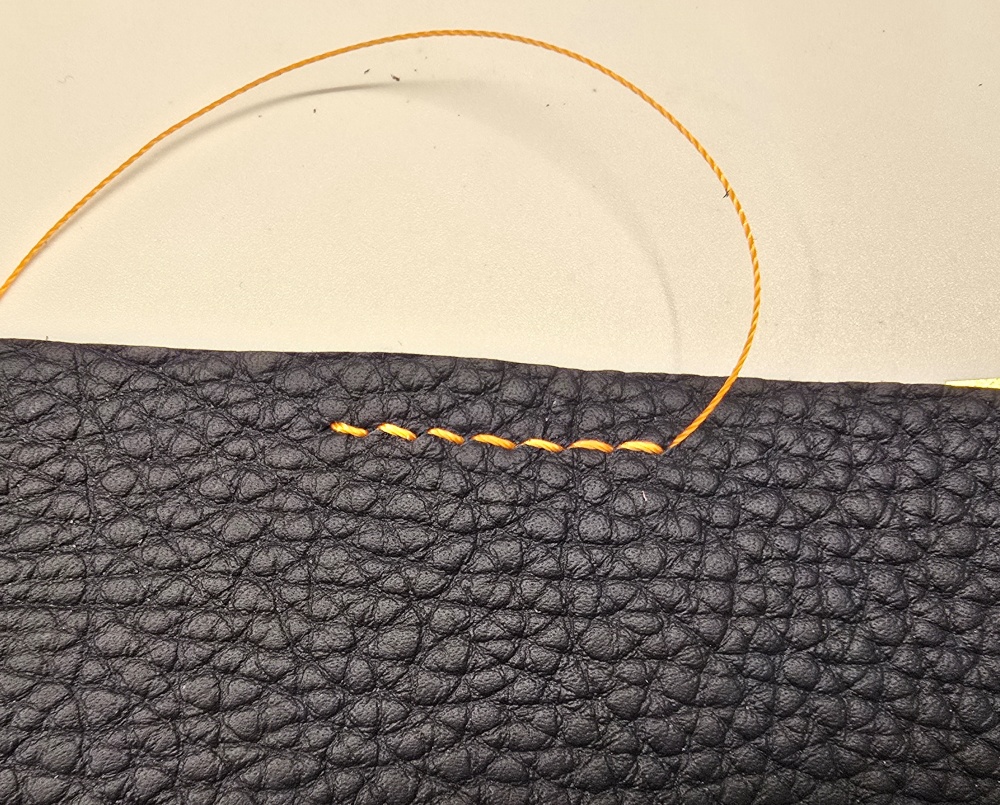
When handling new leather or a new pattern, I do not jump straight into the main work. I cut the exact same leather to be used for the project and do a short test stitch.
First, I check whether the thread passes through the stitching hole too loosely or too tightly. Next, I observe if the leather surface dents or the hole tears lengthwise when the thread is pulled. You shouldn't just look at the appearance on the front; you must also carefully check if the thread sits neatly on the back. Finally, I bend the stitched leather multiple times to ensure the thread does not pop out. A test stitch of just ten stitches can prevent numerous problems in advance.
■ What is More Important Than Good Thread is the Right Combination
In leathercraft, people often try to find only the most expensive or the toughest thread. However, a single thread cannot be the answer for every project. Natural linen thread is excellent for expressing the beauty of handcrafting, while Vinymo MBT provides the reliable stability needed for maintaining uniform shapes and everyday use.
The reason I use Vinymo MBT more often is not that it is unconditionally superior, but because it better suits the framework of the bags I make, my production methods, and the requirement to maintain shape over a long period. Choosing a good thread is not merely about picking a famous brand. It is about finding the perfect match so that the thickness of the leather, the structure of the pattern, the stitch spacing, and the purpose of the item do not conflict with each other.